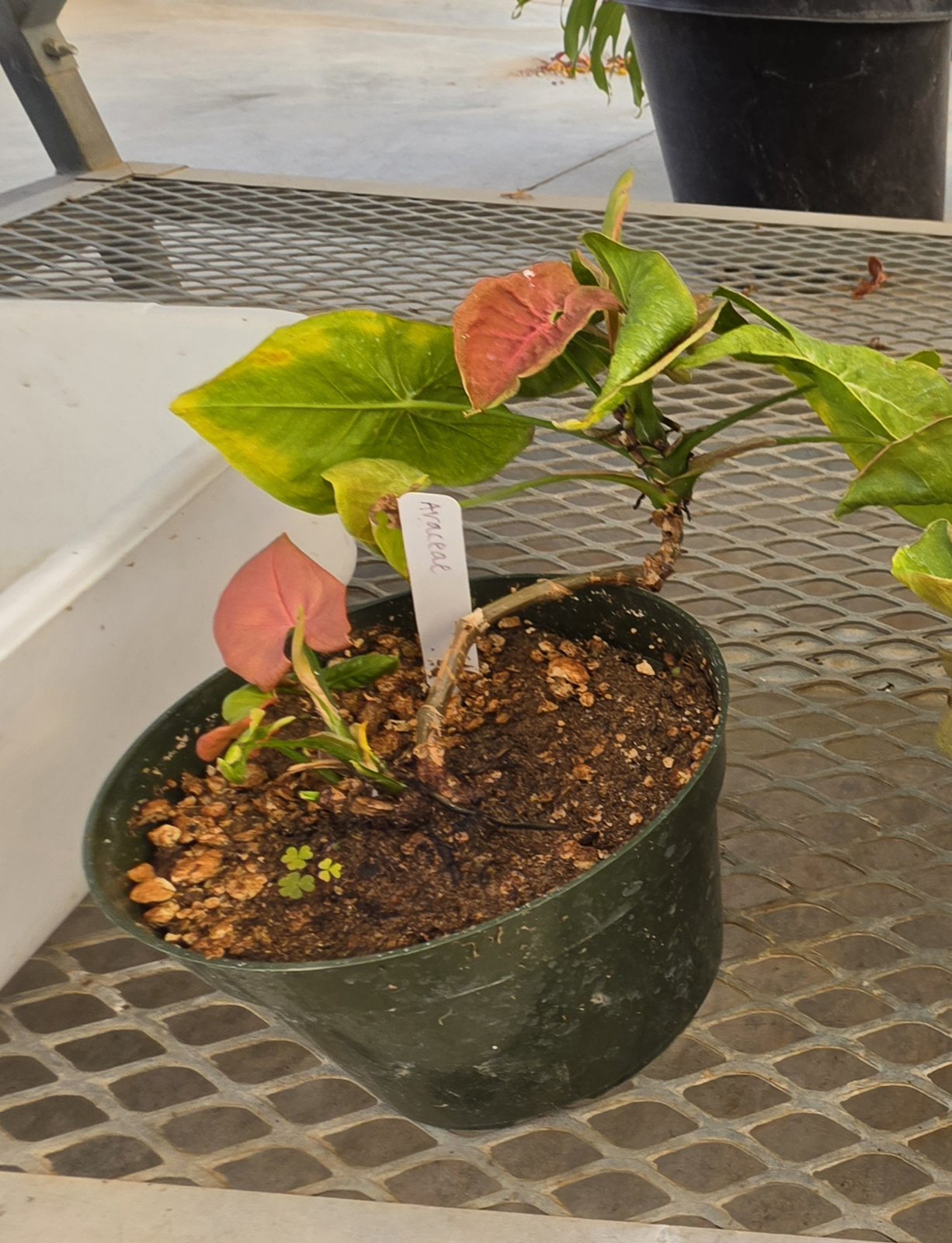
Syngonium podophyllum · Arrowhead plant
CON-0143
📍 Location not set
Identification
Syngonium podophyllum · Arrowhead plant
The plant label reads 'Araceae' confirming the family. The visible leaves show the classic sagittate (arrowhead) shape typical of juvenile Syngonium podophyllum, with green coloration variegated with pink/red and yellow blotching (likely a cultivar such as 'Pink' or a related color form, though the yellowing could also be nutrient stress or chlorosis). The vining, somewhat lax stem with visible nodes and aerial root initials is consistent with Syngonium's climbing/trailing growth habit. The pink-flushed newer leaf near the base is characteristic of certain Syngonium cultivars. Similar genera to rule out include Philodendron (which can have similar juvenile arrow-shaped leaves but typically lacks the pink variegation pattern seen here) and Xanthosoma. The overall plant health appears poor (yellowing, some necrotic leaf margins), which could be due to stress, overwatering, or nutrient deficiency rather than being diagnostic of species. A clearer photo of a mature (lobed) leaf or any inflorescence would help confirm species-level identification and rule out hybrid cultivars.
Generated 2026-08-27 20:50 by anthropic (claude-sonnet-5).
Health
Care Information
- Light
- Bright, indirect light is ideal; tolerates medium light but variegation may fade in low light and growth slows. Avoid direct sun, which can scorch leaves.
- Water
- Water when the top 1-2 inches of soil are dry, roughly every 7-10 days; reduce frequency in winter. Sensitive to overwatering, so let it dry somewhat between waterings.
- Nutrients
- Feed with a balanced liquid fertilizer diluted to half strength monthly during spring and summer; skip feeding in fall and winter.
- Repotting
- Repot every 1-2 years in spring when rootbound; this species grows quickly and benefits from fresh soil and a size-up pot periodically.
- Soil media
- Well-draining aroid mix -- standard potting soil amended with perlite and orchid bark works well.
- Temp & humidity
- 65-80F; moderate to high humidity (40-60%) is ideal, though it adapts reasonably well to average indoor humidity.
- Temperature range
- 🌡️ 65-80F
- Humidity range
- 💦 40-60%
- Care group
- 🏷️ Medium Light & Moderate Humidity
- Toxicity
- Contains calcium oxalate crystals; toxic if ingested by pets or people and sap can irritate skin/eyes -- wear gloves when pruning and keep away from curious visitors or animals.
- Pests & diseases
- Watch for spider mites, mealybugs, and scale, especially in dry conditions; root rot can occur if overwatered or soil stays soggy.
- Propagation
- Very easy from stem cuttings with a node, rooted in water or moist soil; this is the standard and reliable method.
Generated 2026-08-27 20:52 by anthropic (claude-sonnet-5).