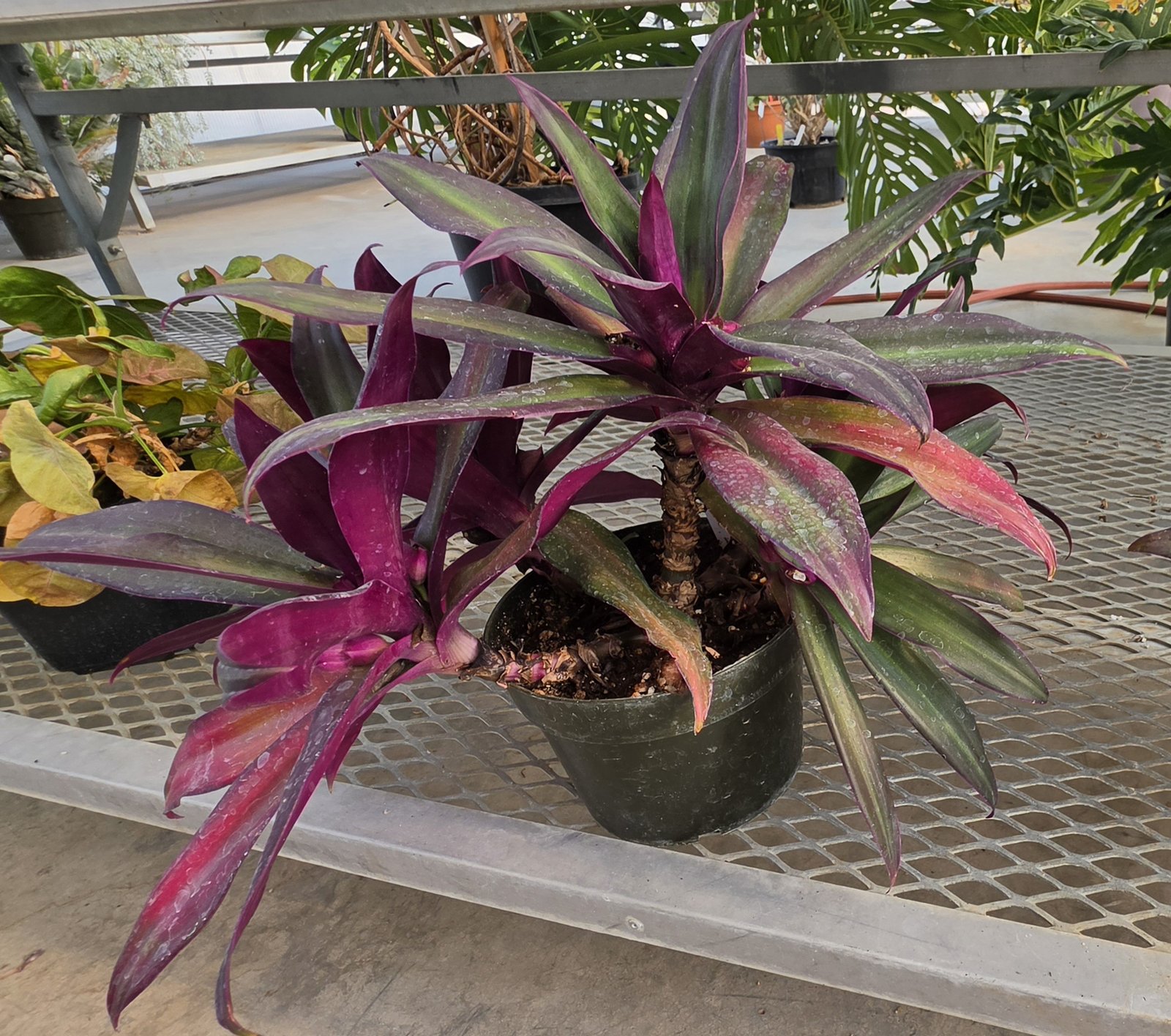
Tradescantia spathacea · Moses-in-the-cradle (possibly a Tillandsia/bromeliad hybrid cultivar)
CON-0141
📍 Location not set
Identification
Tradescantia spathacea · Moses-in-the-cradle (possibly a Tillandsia/bromeliad hybrid cultivar)
The plant forms a rosette of long, lance-shaped, strap-like leaves radiating from a central point, with striking purple-magenta undersides/backs and green-and-purple striped upper surfaces, which is characteristic of Tradescantia spathacea (Moses-in-the-cradle/boat lily) or possibly a Neoregelia bromeliad cultivar. The thick, succulent-looking leaf bases and rosette growth habit with a short woody stem visible at the base are consistent with either genus. The vivid pink/purple coloration with green striping is typical of variegated cultivars like Tradescantia spathacea 'Sitara's Gold' or 'Tricolor', but Neoregelia bromeliads also show this exact color pattern and rosette form. Without a clearer view of leaf texture (fleshy/succulent vs. more fibrous), the base of the plant to check for bromeliad tank structure, or a flower, I cannot distinguish definitively between these possibilities. A closer photo of the leaf cross-section, the central cup/tank area, or any flower structure would help confirm whether this is a Tradescantia or a bromeliad genus like Neoregelia.
Generated 2026-08-24 23:13 by anthropic (claude-sonnet-5).
Health
Care Information
- Light
- Bright indirect light to partial shade; some direct morning sun enhances leaf coloration but avoid harsh midday sun.
- Water
- Water when the top 1-2 inches of soil are dry, roughly every 7-10 days; this plant tolerates some drought better than overwatering.
- Nutrients
- Balanced liquid fertilizer diluted to half-strength monthly during spring and summer; skip in fall/winter.
- Repotting
- Repot every 1-2 years in spring, or when the rosette outgrows its pot or offsets crowd the container.
- Soil media
- Well-draining standard potting mix with added perlite or sand.
- Temp & humidity
- 65-85F; moderate humidity is fine (around 40-60%), tolerant of average indoor conditions.
- Temperature range
- 🌡️ 65-85F
- Humidity range
- 💦 40-60%
- Care group
- 🏷️ Medium Light & Moderate Humidity
- Toxicity
- Sap can cause skin and eye irritation and is toxic if ingested by pets or people; handle with gloves and keep away from public touching, especially near children and pets.
- Pests & diseases
- Generally hardy; watch for mealybugs and scale, and root rot if overwatered or left in soggy soil.
- Propagation
- Easily propagated by separating rooted offsets (pups) from the base of the parent rosette and potting them individually.
Generated 2026-08-24 23:14 by anthropic (claude-sonnet-5).