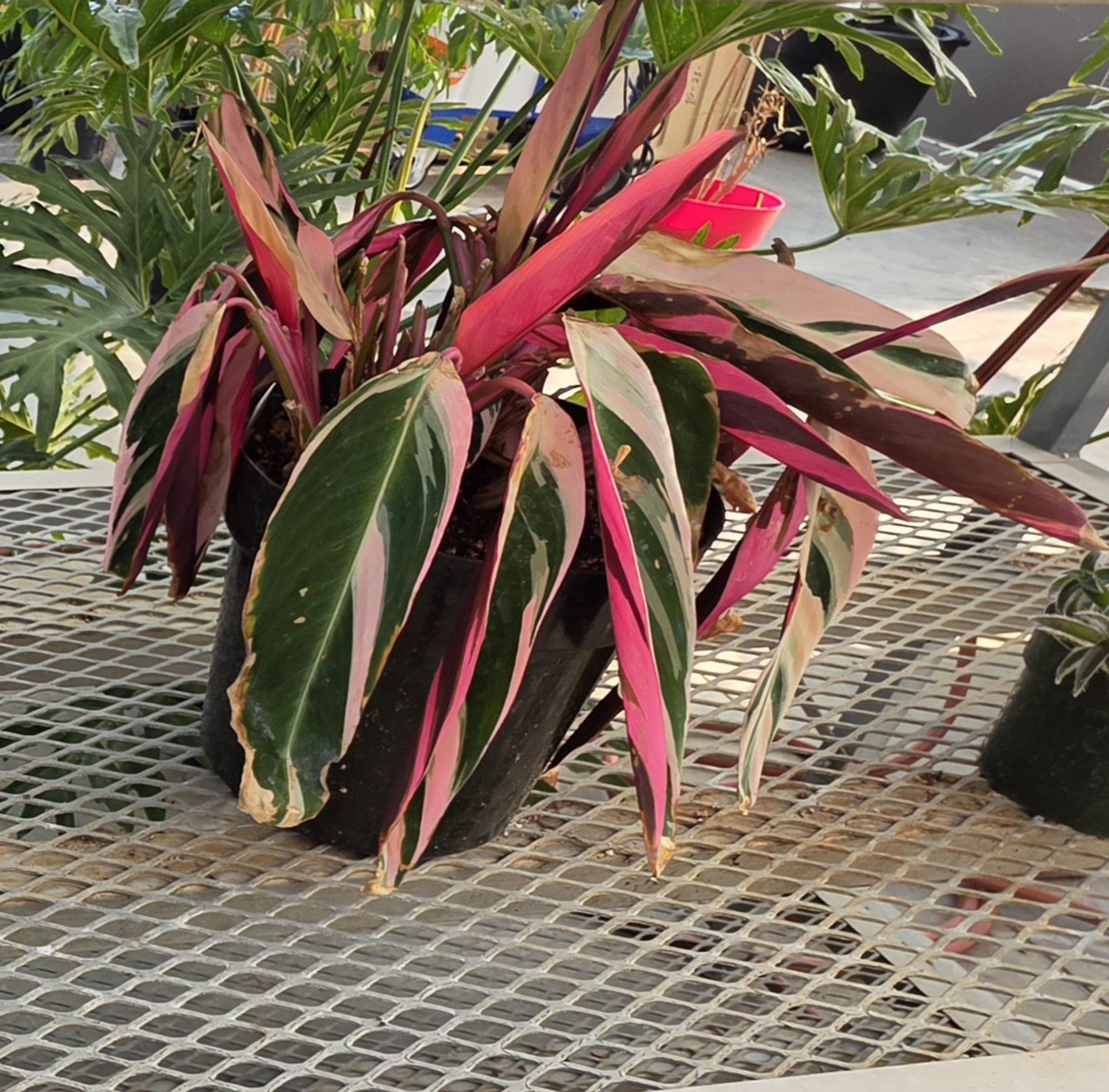
Stromanthe sanguinea 'Triostar' · Triostar Stromanthe (Tricolor Stromanthe)
CON-0137
📍 Location not set
Identification
Stromanthe sanguinea 'Triostar' · Triostar Stromanthe (Tricolor Stromanthe)
The plant shows lance-shaped leaves with striking variegation in cream/white, green, and pink-magenta blotches and streaks, with leaf undersides and new growth showing deep pink-red coloration — classic features of Stromanthe sanguinea 'Triostar'. The growth habit (clumping, arching leaves from a basal rosette) and leaf texture also match this Marantaceae family member. Some leaf tip browning/curling is visible, consistent with the humidity-sensitive nature of this cultivar when grown outside ideal greenhouse conditions. Similar-looking alternatives to rule out would include other variegated Calathea/Goeppertia species or Ctenanthe cultivars, but the specific cream-pink-green tricolor pattern with pink leaf undersides is most characteristic of Triostar rather than typical Calathea patterns (which tend toward more symmetrical pinnate markings without this much pink). A clearer photo of the leaf underside (which should be solid deep magenta-pink in true Triostar) and any flower structure would help confirm with certainty.
Generated 2026-10-06 04:02 by anthropic (claude-sonnet-5).
Health
Care Information
- Light
- Bright, indirect light; avoid direct sun which fades the pink/white variegation and can scorch leaves. Too little light causes the striking coloration to revert to plain green.
- Water
- Keep soil evenly moist but not soggy; water when the top inch starts to dry out, typically weekly. Use filtered or distilled water if possible -- this plant is sensitive to chlorine, fluoride, and salt buildup, which cause leaf tip browning.
- Nutrients
- Dilute balanced liquid fertilizer every 4 weeks during spring and summer; skip in fall and winter.
- Repotting
- Repot every 1-2 years in spring, sizing up only slightly as it prefers being somewhat snug.
- Soil media
- Well-draining, peaty potting mix with added perlite and some orchid bark to hold moisture without staying waterlogged.
- Temp & humidity
- 65-80F; high humidity (60%+) -- use a humidifier or pebble tray, as dry air causes crispy brown leaf edges.
- Temperature range
- 🌡️ 65-80F
- Humidity range
- 💦 60%+
- Care group
- 🏷️ Bright & Humid
- Toxicity
- Non-toxic to pets and people -- safe near visitors and animals.
- Pests & diseases
- Watch for spider mites in dry conditions and root rot from overwatering or poor drainage; also prone to leaf tip browning from low humidity or hard water.
- Propagation
- Division at repotting -- separate rooted offsets/rhizome sections from the base of the plant and pot individually.
Generated 2026-10-06 04:03 by anthropic (claude-sonnet-5).