Hoya carnosa · Wax plant
CON-0127
📍 Location not set
Identification
Hoya carnosa · Wax plant
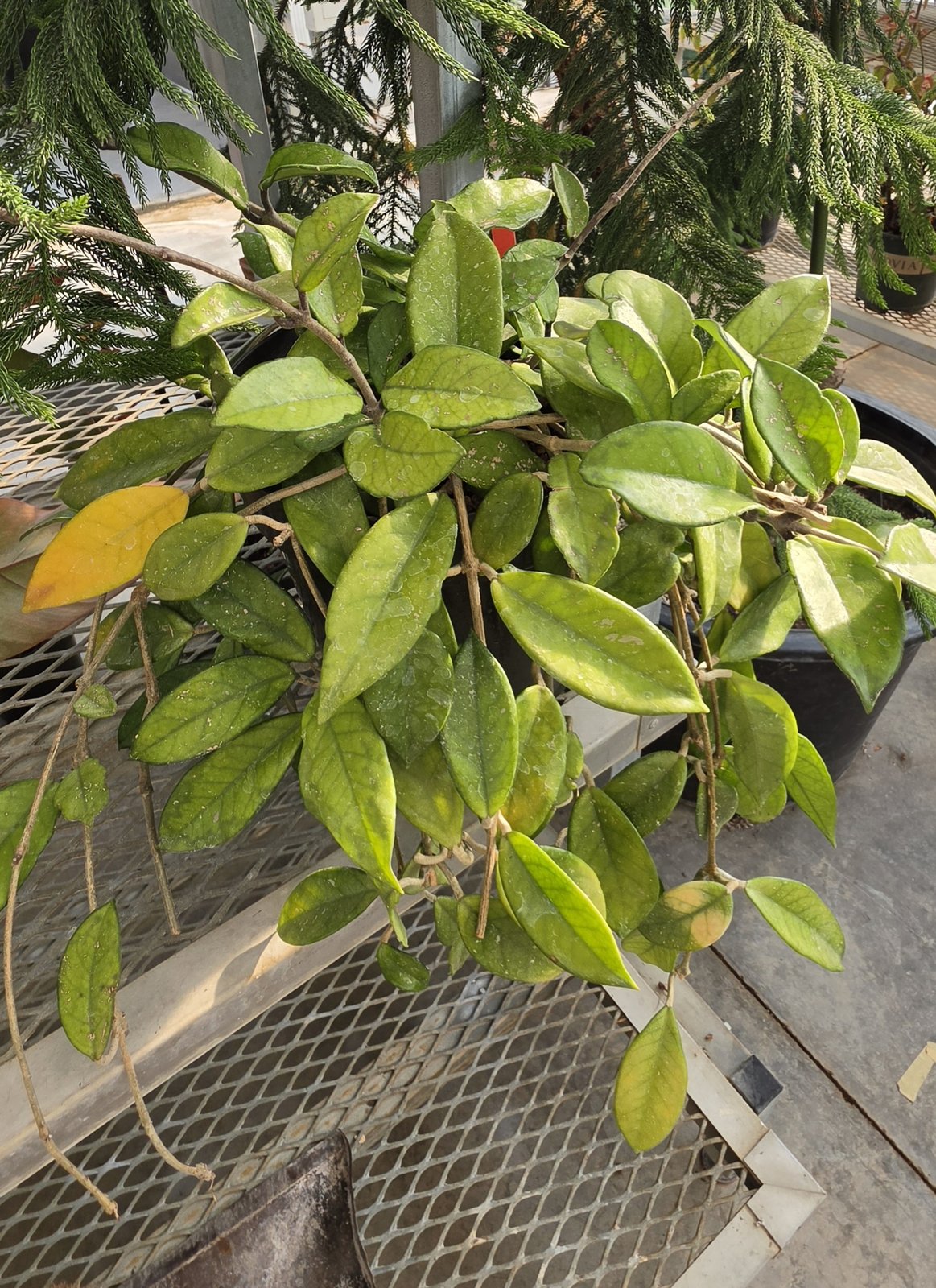
The plant shows a trailing/vining habit with thick, waxy, succulent-textured ovate leaves arranged oppositely along wiry stems - classic characteristics of Hoya species. The leaves have a glossy, slightly speckled or mottled appearance and a somewhat leathery, fleshy substance typical of Hoya carnosa. The stems appear semi-woody and twining, consistent with Hoya's epiphytic/vining growth habit. Some leaves show yellowing which may indicate stress (overwatering, light change, or nutrient issues) but doesn't affect identification. I'm placing this at 'probable' rather than 'certain' because several other Hoya species (H. australis, H. pubicalyx, H. kerrii forms) have similar ovate-elliptic waxy leaves, and without a flower (Hoya flowers are very distinctive star-shaped umbels) or a clearer view of leaf venation and margin, species-level certainty is hard to achieve. A photo of the flower clusters (if present) or a close-up of leaf undersides/venation would help confirm the exact species.
Generated 2026-08-18 17:41 by anthropic (claude-sonnet-5).
Health
Care Information
- Light
- Bright, indirect light is ideal; can tolerate some direct morning sun but avoid harsh midday sun which can bleach or scorch leaves. Too little light will prevent flowering.
- Water
- Water thoroughly when the top 1-2 inches of soil are dry, letting the mix dry out between waterings; reduce watering significantly in winter. Sensitive to overwatering -- root rot is the most common cause of decline.
- Nutrients
- Feed with a balanced liquid fertilizer diluted to half strength every 4-6 weeks during spring and summer; withhold in fall/winter.
- Repotting
- Repot only every 2-3 years, as Hoya blooms best when slightly rootbound; choose a pot only marginally larger than the current one.
- Soil media
- Well-draining, chunky mix -- standard potting soil amended with perlite, orchid bark, and/or coarse sand works well for this semi-epiphytic vine.
- Temp & humidity
- 65-85F; moderate to high humidity (40-60%) appreciated but tolerates average indoor humidity well.
- Temperature range
- 🌡️ 65-85F
- Humidity range
- 💦 40-60%
- Care group
- 🏷️ Bright & Humid
- Toxicity
- Sap can cause mild skin irritation in sensitive individuals; generally considered non-toxic to pets and people but keep away from small children who may chew leaves.
- Pests & diseases
- Watch for mealybugs and aphids, especially around flower clusters and new growth; scale can also appear. Root rot occurs readily if overwatered or soil doesn't drain well.
- Propagation
- Stem cuttings with 2-3 nodes root easily in water or moist soil/perlite mix; leave cut ends to callous slightly before placing in water for best results.
Generated 2026-08-18 17:45 by anthropic (claude-sonnet-5).