Spathiphyllum wallisii · Peace Lily
CON-0121
📍 Location not set
Identification
Spathiphyllum wallisii · Peace Lily
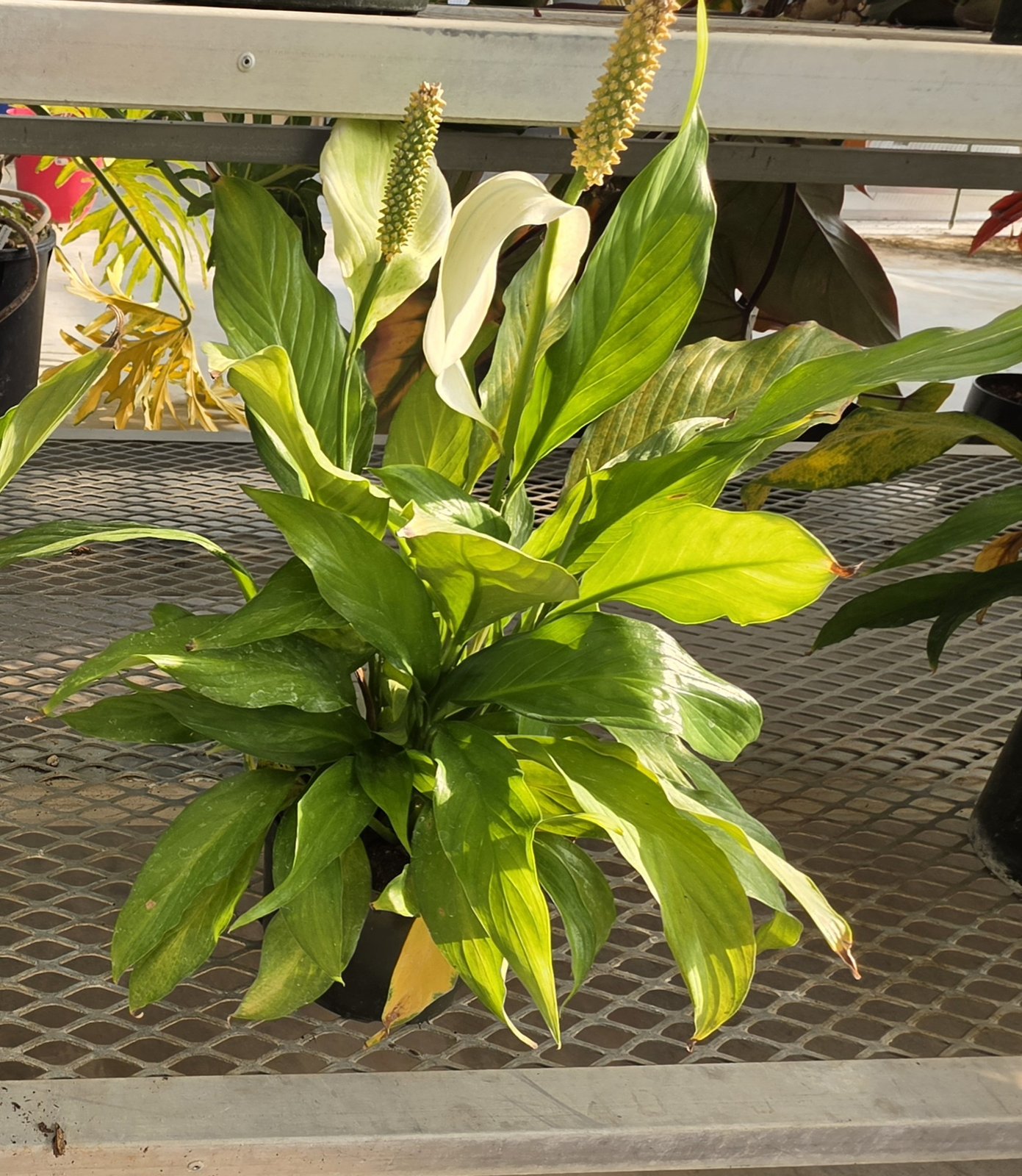
The plant shows the characteristic growth habit of Spathiphyllum: a basal rosette of lance-shaped, glossy, dark green leaves with prominent parallel venation, arising from soil level without a visible stem. The inflorescences are diagnostic - white spathes (modified leaf bracts) partially unfurled around a central spadix covered in tiny bumpy flowers, which is the classic Araceae/Spathiphyllum flower structure. Several spathes have aged to a cream/tan color, which is normal as they mature. The variegated yellow-green coloring on some leaves could indicate either a variegated cultivar (like 'Domino' types) or a nutrient deficiency/light stress rather than true variegation - this makes species-level cultivar identification uncertain. Similar genera to rule out include Anthurium (but leaves are typically more heart-shaped and spathes more colorful/waxy) and Zantedeschia/calla lily (leaves more arrow-shaped, spathe usually more trumpet-like and colorful). The overall spadix/spathe morphology and leaf shape most closely match common Spathiphyllum wallisii or its hybrids, which are the most frequently cultivated species in this genus. A clearer photo of a single leaf margin and the spadix texture, plus confirmation of whether variegation is consistent/genetic rather than chlorotic, would help confirm cultivar-level identification.
Generated 2026-08-27 20:24 by anthropic (claude-sonnet-5).
Health
Care Information
- Light
- Medium to bright indirect light; tolerates low light but blooms less; avoid direct sun which scorches leaves.
- Water
- Keep soil evenly moist but not soggy; water when the top inch of soil is dry, roughly weekly, and note that leaves droop dramatically when thirsty as a visual cue.
- Nutrients
- Balanced liquid fertilizer diluted to half-strength monthly during spring and summer; skip in fall/winter.
- Repotting
- Repot every 1-2 years in spring when rootbound; this plant flowers better when slightly pot-bound.
- Soil media
- Well-draining, peat-based potting mix with some perlite for aeration.
- Temp & humidity
- 65-80F; moderate to high humidity (40-60%) - mist occasionally or use a pebble tray in dry rooms.
- Temperature range
- 🌡️ 65-80F
- Humidity range
- 💦 40-60%
- Care group
- 🏷️ Medium Light & Moderate Humidity
- Toxicity
- Contains calcium oxalate crystals; toxic if chewed/ingested by pets or people, causing mouth/throat irritation - keep away from public foot traffic and curious pets.
- Pests & diseases
- Generally hardy; watch for spider mites and mealybugs in dry air, and root rot from overwatering or poor drainage.
- Propagation
- Division at repotting time -- separate rooted offsets/clumps from the base and pot individually.
Generated 2026-08-27 20:26 by anthropic (claude-sonnet-5).