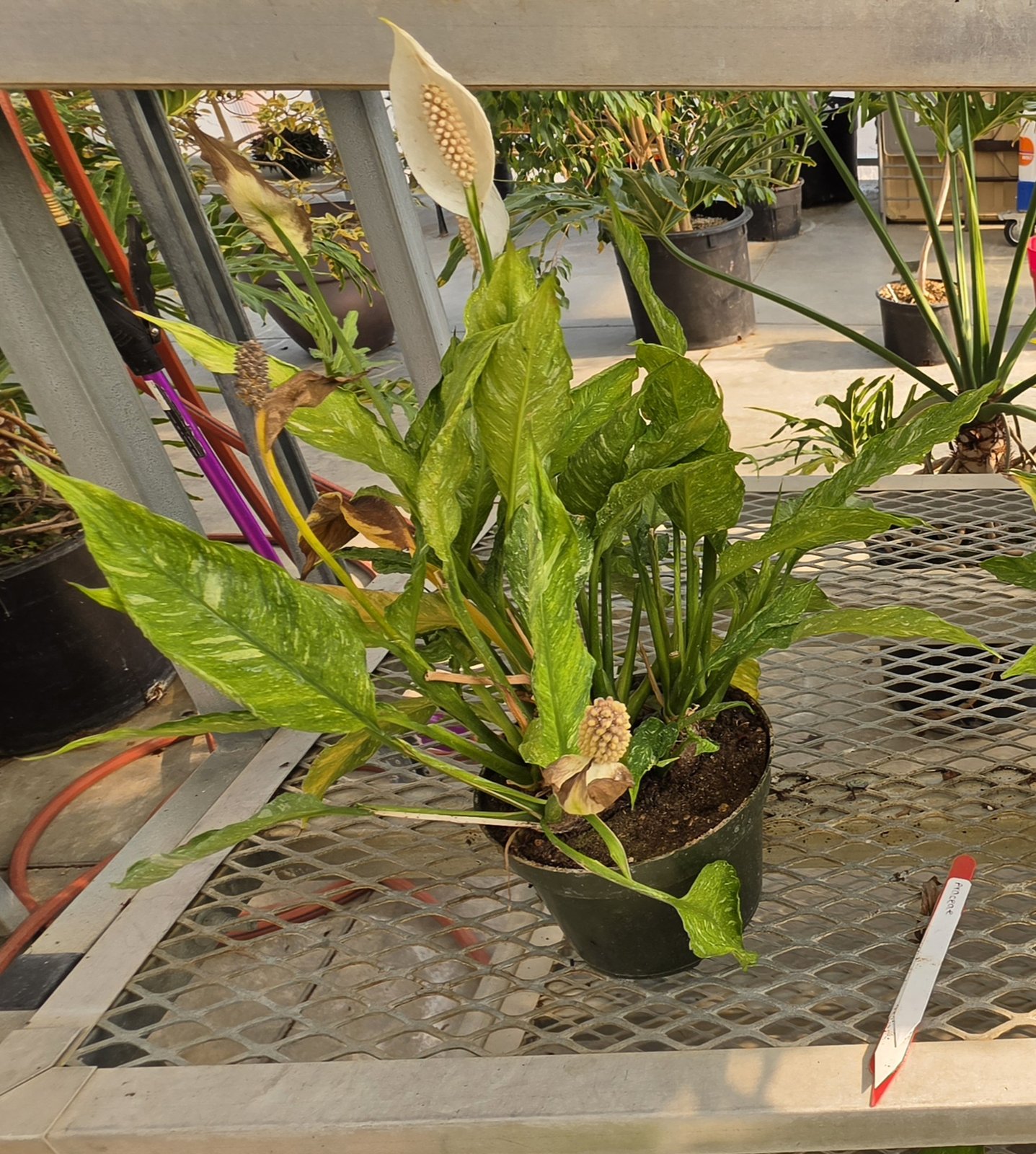
Spathiphyllum sp. (variegated cultivar) · Variegated Peace Lily
CON-0118
📍 Location not set
Identification
Spathiphyllum sp. (variegated cultivar) · Variegated Peace Lily
The plant shows the classic Spathiphyllum growth habit: a basal rosette of lance-shaped, glossy leaves with prominent parallel venation arising directly from soil level, and an inflorescence consisting of a white/cream spathe (modified leaf bract) surrounding a cylindrical spadix covered in tiny flowers - visible clearly in the upper left of the image. Several older, browned spent inflorescences are also visible lower in the plant, consistent with peace lily flowering behavior. The leaves show strong irregular cream/yellow variegation (marbling pattern), indicating this is a variegated cultivar (e.g., 'Domino' or similar variegated Spathiphyllum cultivar) rather than the common solid-green species like S. wallisii. Exact species/cultivar cannot be pinned down without more information on plant size, flower size, and cultivar tag. Alternatives to rule out include variegated Aglaonema (Chinese evergreen), but the distinctive hooded spathe and spadix inflorescence confirm this is Spathiphyllum, not Aglaonema, which lacks this type of showy bloom. A closer photo of a single leaf and the spadix, plus mature plant size, would help confirm exact cultivar.
Generated 2026-08-26 21:15 by anthropic (claude-sonnet-5).
Health
Care Information
- Light
- Bright, indirect light is ideal; variegated cultivars often need slightly brighter light than solid-green types to maintain their leaf patterning, but keep out of direct midday sun to avoid scorch.
- Water
- Water when the top inch of soil feels dry, roughly once a week; the plant will droop noticeably when thirsty and perks back up quickly after watering, which makes it easy to gauge. Avoid soggy soil.
- Nutrients
- Feed with a balanced liquid fertilizer diluted to half strength monthly during spring through fall; skip or reduce to every other month in winter.
- Repotting
- Repot every 1-2 years in spring when roots become crowded or start circling the pot base.
- Soil media
- Well-draining, peat-based potting mix with added perlite or bark for aeration.
- Temp & humidity
- 65-80F; prefers moderate to high humidity (40-60%+) - mist occasionally or group with other plants if conservatory air is dry.
- Temperature range
- 🌡️ 65-80F
- Humidity range
- 💦 40-60%
- Care group
- 🏷️ Medium Light & Moderate Humidity
- Toxicity
- Contains calcium oxalate crystals; mildly toxic if chewed or ingested by pets or people, causing mouth/throat irritation - keep away from curious pets and small children in public areas.
- Pests & diseases
- Generally trouble-free; watch for mealybugs and spider mites, especially in dry conditions. Root rot can occur if overwatered or left in standing water.
- Propagation
- Division at repotting time - separate rooted offsets/clumps from the base of the mother plant and pot individually.
Generated 2026-08-26 21:15 by anthropic (claude-sonnet-5).