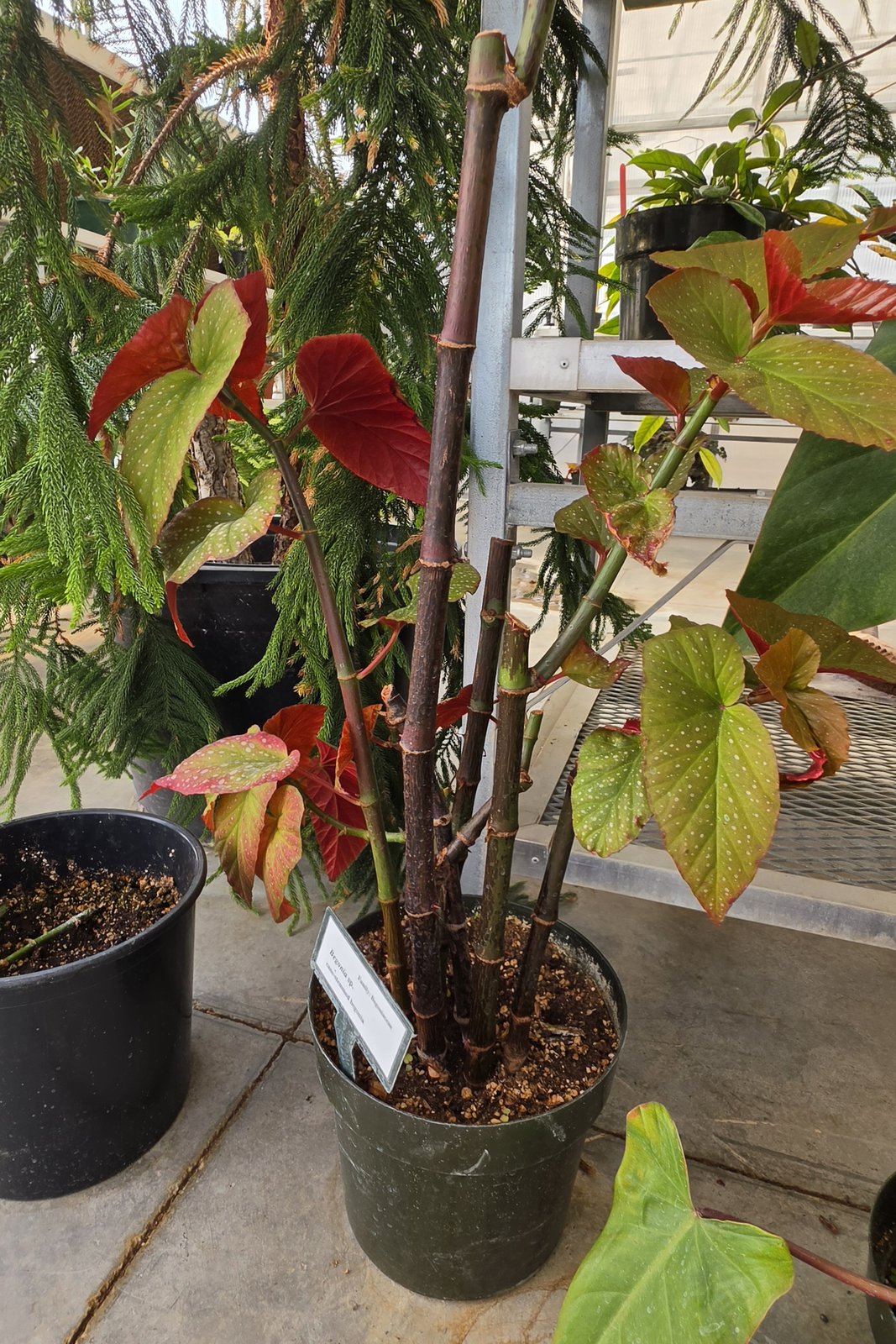
Begonia sp. (cane-begonia type) · Cane begonia
CON-0111
📍 Location not set
Identification
Begonia sp. (cane-begonia type) · Cane begonia
The plant shows the classic features of a cane (Angel Wing type) begonia: upright jointed, cane-like stems with visible nodes, asymmetric wing-shaped leaves, silvery-white spotting on the upper leaf surface, and red/maroon coloration on the leaf undersides and margins. The plant label visible in the pot appears to start with 'Begonia' confirming the genus. The exact species/cultivar cannot be determined without seeing flowers or a clearer view of leaf margin serration, but the growth habit and spotted wing-shaped leaves strongly suggest a cultivar in the Begonia coccinea/aconitifolia hybrid group (Angel Wing begonias), similar to 'Sophie Cecile' or related cane hybrids. To pin down the exact cultivar, a photo of the flowers (color, size) and a close-up of leaf margin/texture would help, as many cane begonia cultivars look very similar vegetatively.
Generated 2026-08-31 16:14 by anthropic (claude-sonnet-5).
Health
Care Information
- Light
- Bright, indirect light for best cane growth and bloom; a few hours of gentle morning sun is fine but avoid harsh midday direct sun which scorches the leaves.
- Water
- Water thoroughly when the top 1-2 inches of soil are dry, then let it drain completely; these begonias dislike soggy roots but also shouldn't dry out completely for long.
- Nutrients
- Feed with a balanced liquid fertilizer diluted to half-strength every 2-4 weeks during spring through fall; suspend feeding in winter when growth slows.
- Repotting
- Repot every 1-2 years in spring, or when rootbound/top-heavy from cane growth; cane begonias can get tall and benefit from fresh soil and occasionally being cut back.
- Soil media
- Well-draining, airy potting mix -- standard potting soil amended with perlite or orchid bark works well.
- Temp & humidity
- 65-80F; moderate to high humidity (40-60%) is ideal -- a pebble tray or nearby humidifier helps if the room runs dry, though this type tolerates average indoor humidity better than rhizomatous begonias.
- Temperature range
- 🌡️ 65-80F
- Humidity range
- 💦 40-60%
- Care group
- 🏷️ Bright & Humid
- Toxicity
- Contains insoluble oxalates; mildly toxic if ingested by pets or people (mouth/throat irritation, drooling) -- keep away from public foot traffic and curious pets.
- Pests & diseases
- Watch for powdery mildew and botrytis in stagnant, overly humid air; also susceptible to mealybugs and spider mites on leaf undersides. Root and stem rot occur quickly if overwatered or if the mix stays soggy.
- Propagation
- Very easy from stem cuttings -- take a 3-5 inch cane cutting with a few nodes, remove lower leaves, and root in water or moist soil; roots typically form within a few weeks.
Generated 2026-08-31 16:16 by anthropic (claude-sonnet-5).