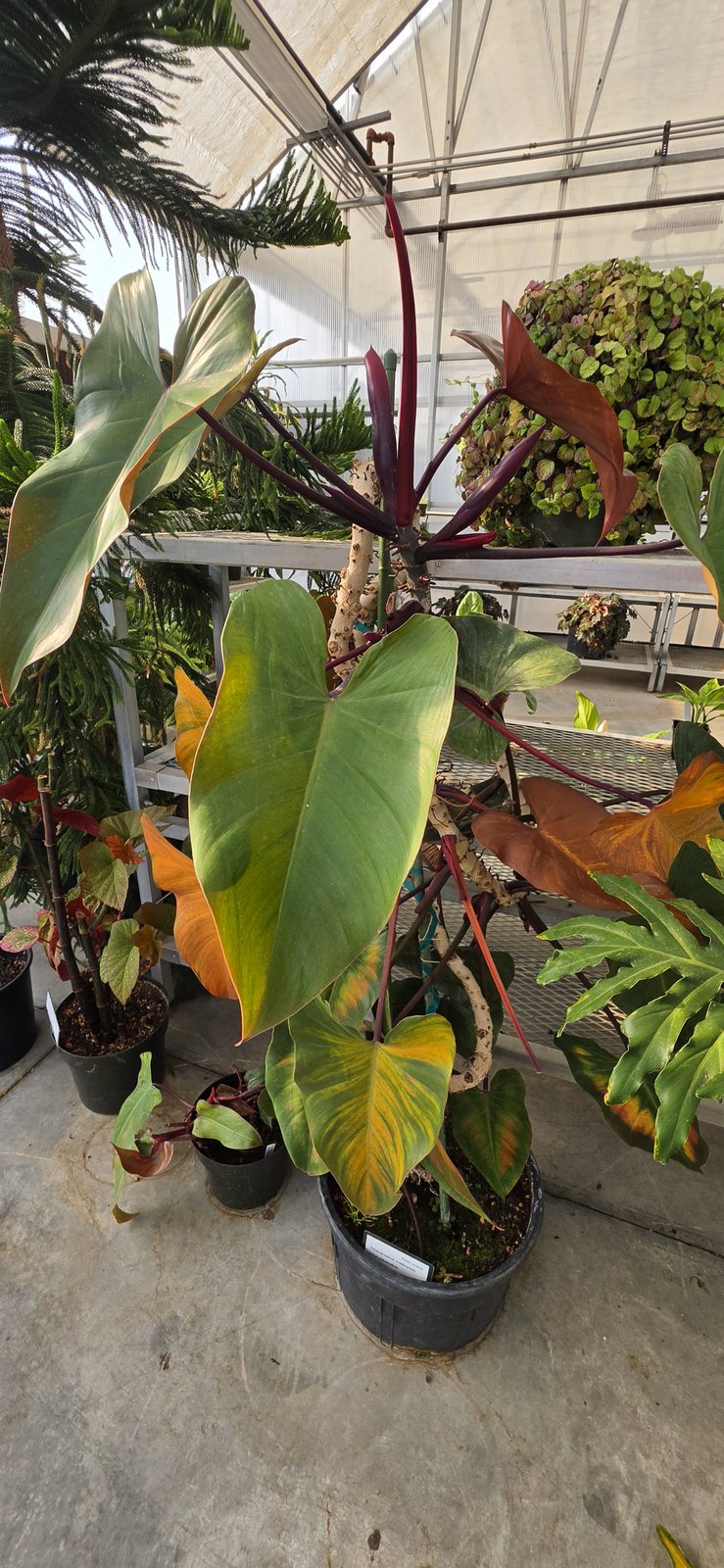
Philodendron erubescens · Blushing Philodendron
CON-0110
📍 Location not set
Identification
Philodendron erubescens · Blushing Philodendron
The plant shows large, glossy, heart-shaped (cordate) leaves with prominent reddish-maroon petioles and new growth cataphylls, which is characteristic of Philodendron erubescens and its many cultivars. The reddish-burgundy coloration on stems and emerging leaves, combined with the climbing/epiphytic growth habit visible from the aerial roots on the cane, matches this species well. The variegation pattern seen on some lower leaves (yellow-green marbling) is consistent with cultivars like 'Pink Princess' or similar erubescens hybrids, though the uniform green upper leaves suggest it may be a less variegated form or the variegation is environmental/genetic chimera typical of this species. To confirm with certainty, a close-up of the leaf margin, petiole cross-section, and ideally a flowering spathe would help rule out similar species such as Philodendron 'Prince of Orange' or other red-stemmed Philodendron hybrids which can look very similar in vegetative state.
Generated 2026-10-06 05:12 by anthropic (claude-sonnet-5).
Health
Care Information
- Light
- Bright indirect light; can tolerate medium light but leaf color and growth are best in brighter conditions. Avoid direct hot sun which can scorch leaves.
- Water
- Water when the top 1-2 inches of soil are dry, typically weekly; reduce frequency in winter. Dislikes soggy soil.
- Nutrients
- Balanced liquid fertilizer every 4 weeks during spring/summer growth; skip or reduce in fall/winter.
- Repotting
- Repot every 1-2 years in spring, or when roots are visibly crowded or emerging from drainage holes; this is a vigorous climber that appreciates fresh mix.
- Soil media
- Chunky, well-draining aroid mix -- standard potting soil amended with bark, perlite, and some peat/coco coir.
- Temp & humidity
- 65-80F; moderate to high humidity (50-60%+) preferred -- mist occasionally or use a pebble tray/humidifier in drier rooms.
- Temperature range
- 🌡️ 65-80F
- Humidity range
- 💦 50-60%+
- Care group
- 🏷️ Bright & Humid
- Toxicity
- Contains calcium oxalate crystals; toxic if chewed/ingested by pets or people, and sap can irritate skin and eyes -- wear gloves when pruning and keep away from public foot traffic.
- Pests & diseases
- Watch for mealybugs, aphids, and spider mites, especially in dry air; root rot can occur if overwatered or in poorly draining media.
- Propagation
- Stem cuttings with at least one node root readily in water or moist chunky mix; a vining philodendron that propagates easily this way.
Generated 2026-08-26 21:14 by anthropic (claude-sonnet-5).