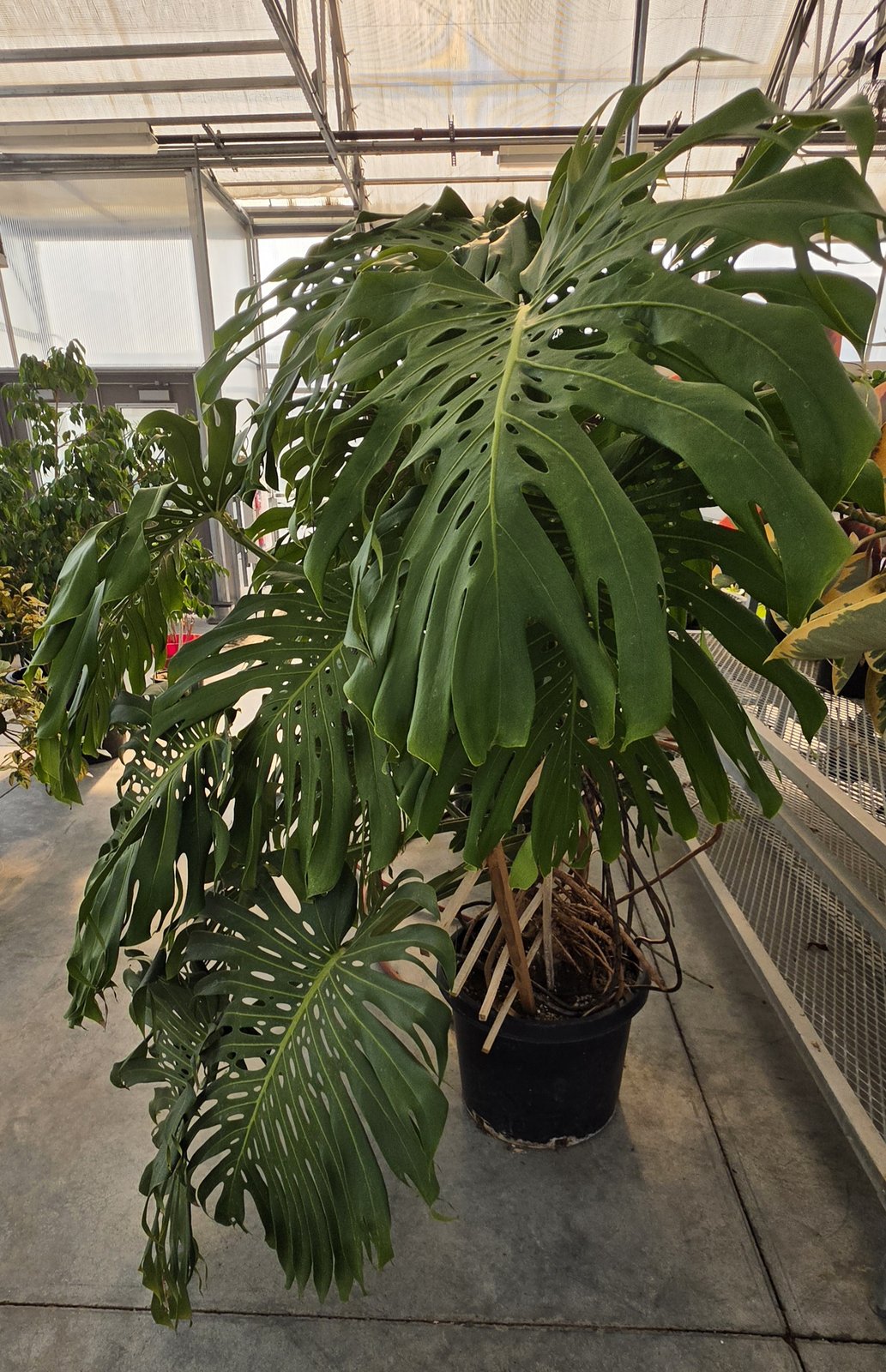
Monstera epipremnoides · Philodendron-leaf Monstera (also sold as 'Esqueleto')
CON-0107
Identification
Monstera epipremnoides · Philodendron-leaf Monstera (also sold as 'Esqueleto')
The plant shows large, deeply pinnatifid leaves with extensive elongated fenestrations (holes) running parallel to the lateral veins, rather than the broad irregular holes seen in Monstera deliciosa. The leaf lobes are narrow and finger-like with many oblong perforations between the midrib and margin, a pattern characteristic of Monstera epipremnoides (often sold under the trade name 'Esqueleto') or similar highly-fenestrated Monstera species. Growth habit is a climbing/trailing aroid vine, consistent with Monstera. However, similar fenestration patterns also occur in Monstera adansonii (though that species usually has smaller, more oval leaves with rounder holes) and some Rhaphidophora or Epipremnum species, so exact species identification is not certain without seeing petiole geticulation, cataphylls, or a mature leaf with characteristic sinus shape at the base. A close-up of the petiole (winged or not), leaf base shape, and any aerial root/cataphyll detail would help confirm the exact species.
Generated 2026-08-16 20:52 by anthropic (claude-sonnet-5).
Health
Care Information
- Light
- Bright, indirect light; some filtered direct sun is tolerated, but avoid harsh midday sun which can scorch the fenestrated leaves.
- Water
- Water thoroughly when the top 1-2 inches of soil are dry, typically every 7-10 days; let the mix dry a bit more in winter to avoid root rot.
- Nutrients
- Feed with a balanced liquid fertilizer diluted to half-strength every 4 weeks during spring through summer; skip feeding in winter.
- Repotting
- Repot every 1-2 years in spring, or when roots emerge from drainage holes/crowd the pot; give it a sturdy moss pole or totem to climb as it matures.
- Soil media
- Chunky aroid mix of bark, perlite, and coco chunks for sharp drainage while retaining some moisture.
- Temp & humidity
- 65-85F; thrives in high humidity (60%+) which encourages larger fenestrations -- use a humidifier or pebble tray in drier rooms.
- Temperature range
- 🌡️ 65-85F
- Humidity range
- 💦 60%+
- Care group
- 🏷️ Bright & Humid
- Toxicity
- Contains calcium oxalate crystals; toxic if chewed or ingested by pets or people, and sap can irritate skin/eyes -- handle cuttings with care and keep away from curious visitors.
- Pests & diseases
- Watch for spider mites and mealybugs, especially in low-humidity conditions; root rot can occur if overwatered or soil stays soggy.
- Propagation
- Stem cuttings with at least one node root readily in water or moist sphagnum moss; keep warm and humid until new roots form.
Generated 2026-08-24 22:59 by anthropic (claude-sonnet-5).