Ficus benjamina · Weeping Fig
CON-0104
📍 Location not set
Identification
Ficus benjamina · Weeping Fig
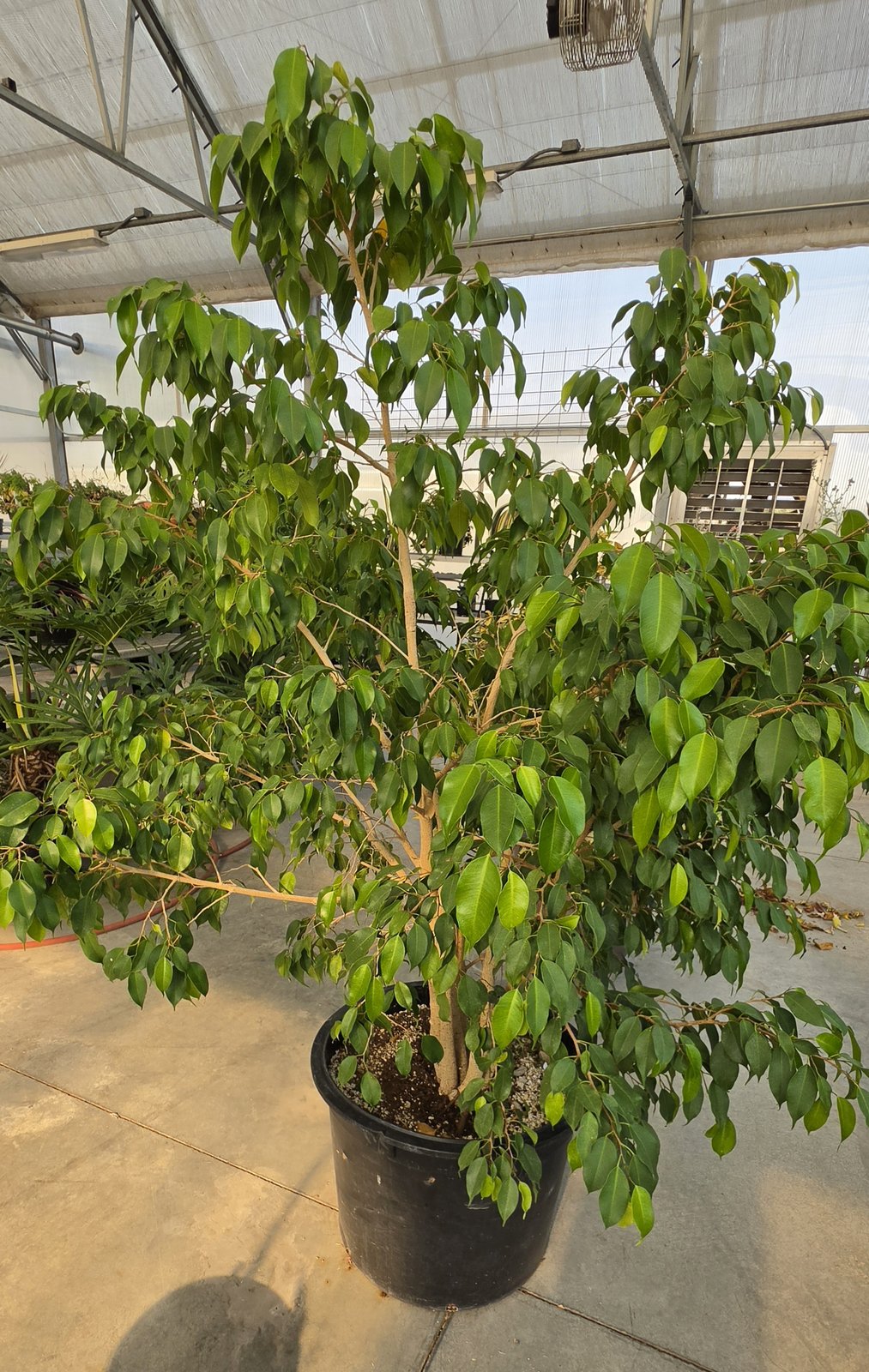
The plant shows the characteristic weeping/drooping branch habit with small, glossy, ovate-elliptic leaves with pointed tips (acuminate apex) arranged alternately on slender, slightly zigzagging twigs. The overall tree form with a woody trunk splitting into multiple thin branches that arch downward, combined with the pot size suggesting it's grown as an indoor/greenhouse specimen tree, is classic for Ficus benjamina, one of the most common conservatory and houseplant trees. Similar species to rule out include Ficus microcarpa (Chinese banyan/laurel fig), which has similar leaves but a more upright, less pendulous habit and thicker leaves, and Ficus alii, which has narrower, more lance-shaped leaves. A closer photo of the leaf base and any latex/sap exuded when a leaf is broken, plus a view of the bark texture, would help confirm the exact species versus these look-alikes.
Generated 2026-08-27 20:22 by anthropic (claude-sonnet-5).
Health
Care Information
- Light
- Bright indirect light; some direct morning sun is fine, but protect from harsh midday sun and keep away from deep shade.
- Water
- Water when the top inch or two of soil is dry, roughly weekly in the growing season; let it dry out a bit more between waterings in winter. Avoid soggy soil.
- Nutrients
- Feed with a balanced liquid fertilizer monthly during spring and summer; suspend feeding in fall and winter.
- Repotting
- Repot every 2 years or when rootbound, ideally in spring; this species tolerates being slightly potbound and can also be root-pruned to keep size manageable.
- Soil media
- Well-draining standard potting mix, e.g. peat/bark-based mix with added perlite for aeration.
- Temp & humidity
- 65-80F; moderate humidity is fine (40%+), though it appreciates higher humidity and benefits from occasional misting in dry rooms.
- Temperature range
- 🌡️ 65-80F
- Humidity range
- 💦 40-60%
- Care group
- 🏷️ Medium Light & Moderate Humidity
- Toxicity
- Sap can cause mild skin irritation and is mildly toxic if ingested by pets or people; also a common allergen trigger (latex-sensitive individuals should use caution). Keep fallen leaves swept up away from pets.
- Pests & diseases
- Very prone to leaf drop from environmental changes (drafts, light shifts, relocation); watch for scale, mealybugs, and spider mites, especially in dry indoor air.
- Propagation
- Stem cuttings 4-6 inches long root readily in water or moist soil; take cuttings with a few leaves and a node, and consider rooting hormone for reliability.
Generated 2026-08-27 20:23 by anthropic (claude-sonnet-5).