Zamioculcas zamiifolia · ZZ Plant
CON-0102
📍 Location not set
Identification
Zamioculcas zamiifolia · ZZ Plant
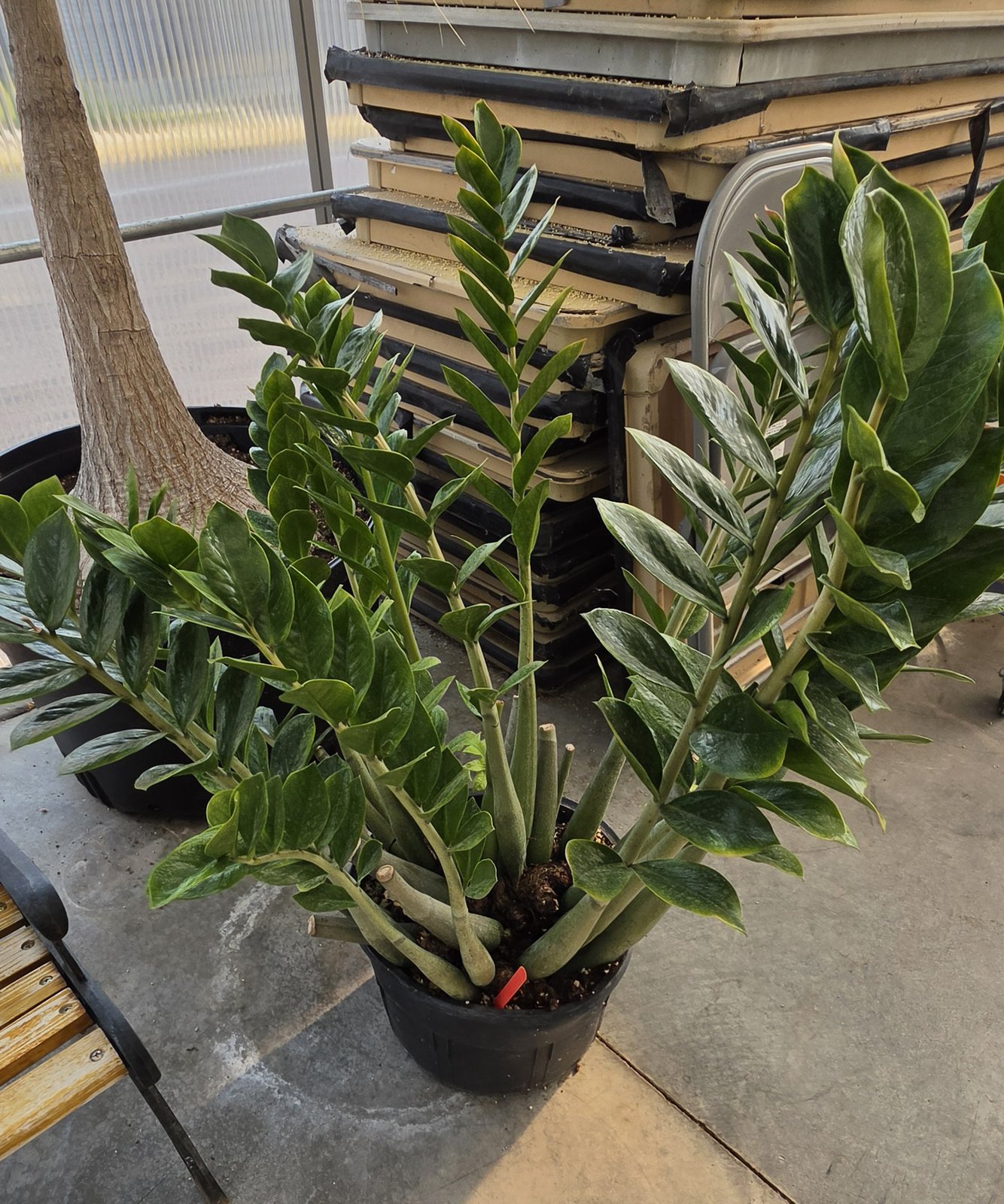
The plant shows the characteristic growth habit of ZZ Plant: thick, swollen, pale petiole bases emerging directly from soil (visible potato-like rhizomatous bases at the base of stems), pinnately compound leaves with glossy, dark green, ovate-lanceolate leaflets arranged alternately along upright succulent stems. The leaflets have a waxy, thick, rubbery texture and smooth margins typical of Zamioculcas. The overall rosette of arching, unbranched fronds rising from a basal cluster of thickened stems is a strong diagnostic feature distinguishing it from similar-looking plants like Zamia (cycad, which has stiffer leaflets and a caudex) or Pachypodium/other succulents. Confidence is 'probable' rather than 'certain' because the photo doesn't show a flower or rhizome clearly enough to rule out a variegated or dwarf cultivar (e.g., 'Zamicro' or variegated ZZ types), and image lighting/quality limits full certainty on leaflet texture and margin details.
Generated 2026-08-24 19:21 by anthropic (claude-sonnet-5).
Health
Care Information
- Light
- Tolerates low light but grows best in bright indirect light; avoid intense direct sun which can scorch leaves.
- Water
- Drought-tolerant; water only when soil is completely dry, roughly every 2-3 weeks, less in winter. Rhizomes store water, so overwatering is the main risk.
- Nutrients
- Balanced liquid fertilizer diluted to half-strength monthly during spring/summer growing season; skip in winter.
- Repotting
- Repot every 2-3 years in spring, only when clearly rootbound -- ZZ prefers being slightly snug in its pot.
- Soil media
- Well-draining potting mix with extra perlite or sand; good drainage is essential to prevent rhizome rot.
- Temp & humidity
- 65-79F; tolerates average room humidity (30-50%) without issue -- no misting or extra humidity needed.
- Temperature range
- 🌡️ 65-79F
- Humidity range
- 💦 30-50%
- Care group
- 🏷️ Low Light & Dry
- Toxicity
- All parts contain calcium oxalate crystals; toxic if ingested and sap can irritate skin/eyes -- wear gloves when handling and keep away from pets and curious visitors.
- Pests & diseases
- Generally trouble-free and pest-resistant; occasional spider mites or mealybugs in very dry conditions. Root/rhizome rot is the main risk if overwatered or in poorly draining soil.
- Propagation
- Divide rhizomes at repotting time, or root individual leaflets in soil/water -- leaflet propagation is very slow, often taking months to produce a new rhizome.
Generated 2026-08-24 19:21 by anthropic (claude-sonnet-5).