Ficus lyrata · Fiddle-leaf fig
CON-0100
📍 Location not set
Identification
Ficus lyrata · Fiddle-leaf fig
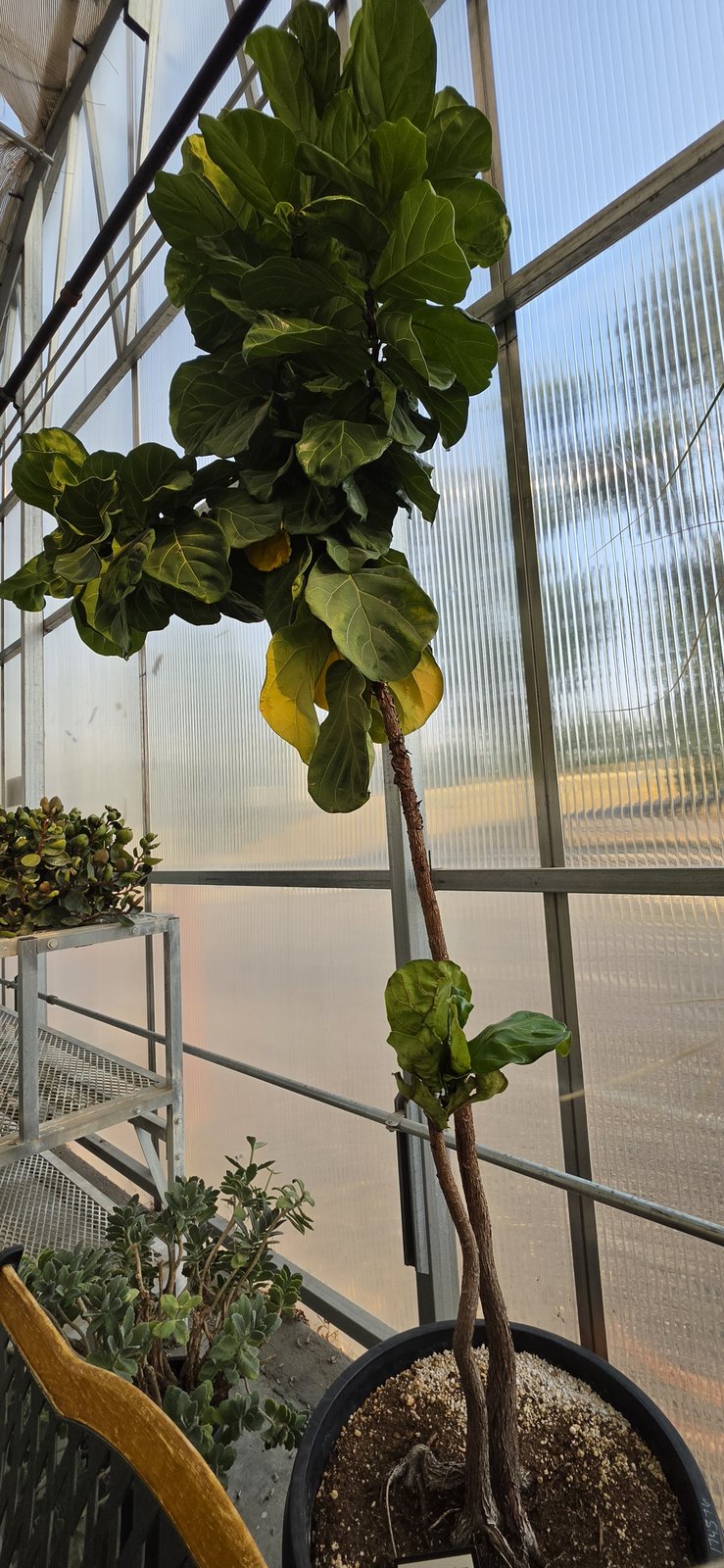
The plant shows the characteristic large, broad, violin/fiddle-shaped leaves with pronounced undulating margins and prominent light-colored venation typical of Ficus lyrata. The leathery dark green leaf texture, thick woody stem with visible leaf scars, and clustered rosette growth habit at the top of a tall bare trunk are all classic for this species. It's grown in a nursery pot with a thick single/braided woody stem, consistent with commercially grown fiddle-leaf figs. Some lower leaves show yellowing, likely due to overwatering or light stress, common in cultivated specimens. This matches the suspected identification well; similar-looking relatives like Ficus altissima or Ficus elastica have different leaf shapes (less lobed, more oval/elongate), ruling them out.
Generated 2026-10-06 04:19 by anthropic (claude-sonnet-5).
Health
Care Information
- Light
- Bright indirect light; some direct morning sun is fine but protect from harsh direct afternoon sun which can scorch the large leaves.
- Water
- Water when the top 1-2 inches of soil are dry, roughly every 7-10 days; reduce frequency in winter. Very sensitive to overwatering and soggy roots.
- Nutrients
- Balanced liquid fertilizer every 4 weeks during spring and summer growing season; withhold in fall and winter.
- Repotting
- Repot every 1-2 years in spring as roots fill the pot; this species often prefers being slightly rootbound and grows well as a large specimen.
- Soil media
- Well-draining potting mix with added perlite or bark to prevent waterlogging.
- Temp & humidity
- 65-80F; moderate to high humidity (40-60%) is ideal, though it tolerates average indoor humidity better than most tropicals.
- Temperature range
- 🌡️ 65-80F
- Humidity range
- 💦 40-60%
- Care group
- 🏷️ Medium Light & Moderate Humidity
- Toxicity
- Contains insoluble calcium oxalates; mildly toxic if chewed or ingested by pets or people, and sap can irritate skin/eyes -- wear gloves when pruning.
- Pests & diseases
- Watch for spider mites and scale, especially in dry air; root rot and leaf drop are common if overwatered or if the plant is moved/shocked suddenly.
- Propagation
- Stem cuttings with a node root well in water or moist soil; air layering also works well for larger specimens.
Generated 2026-10-06 04:20 by anthropic (claude-sonnet-5).