Ficus elastica · Rubber Plant (Rubber Fig)
CON-0092
📍 Location not set
Identification
Ficus elastica · Rubber Plant (Rubber Fig)
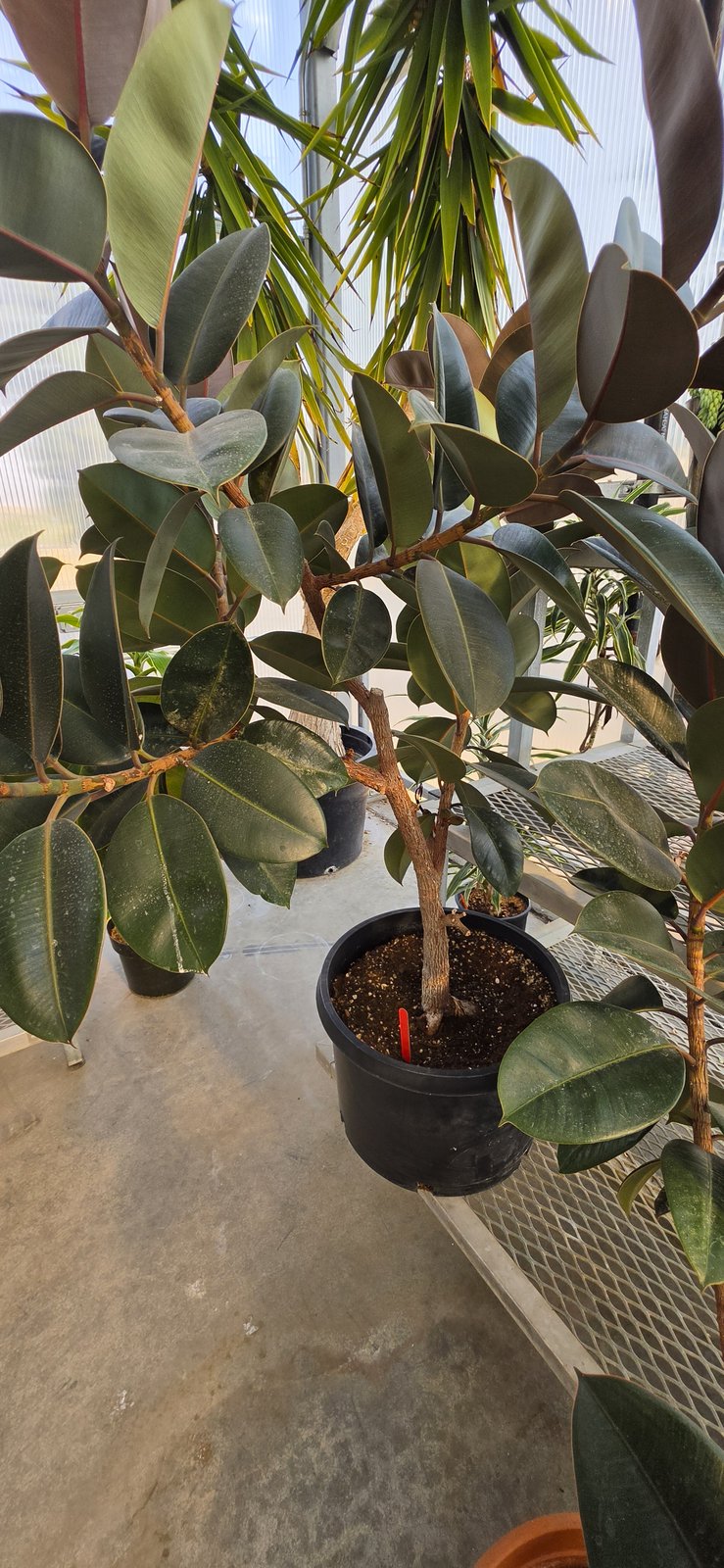
The plant shows thick, glossy, oval-elliptic leaves with prominent pale midribs, dark burgundy-green coloration, and a woody branching trunk with visible leaf scar rings typical of Ficus elastica. The reddish new growth sheaths (stipules) visible at branch tips are also characteristic of this species. The leaf size, leathery texture, and overall shrubby potted tree habit in a nursery/conservatory setting are consistent with common 'Burgundy' or 'Robusta' cultivars of rubber plant. To confirm the exact cultivar, a close-up of a fully unfurled new leaf and its stipule color, plus any variegation pattern, would help distinguish it from similar cultivars like 'Tineke' or 'Ruby', or from other large-leaved Ficus species such as F. lyrata (which has more crinkled, violin-shaped leaves) - which can be ruled out here due to the smooth, non-lobed leaf shape.
Generated 2026-08-15 00:34 by anthropic (claude-sonnet-5).
Health
Care Information
- Light
- Bright indirect light; can tolerate some medium light but growth slows and leaves may be smaller. Avoid intense direct sun which can scorch the glossy leaves.
- Water
- Water thoroughly when the top 1-2 inches of soil are dry, then let excess drain fully; cut back frequency in winter. Sensitive to overwatering, so never let the pot sit in standing water.
- Nutrients
- Feed with a balanced liquid fertilizer monthly during spring through summer; skip feeding in fall and winter when growth slows.
- Repotting
- Repot every 2 years or when roots fill the pot, ideally in spring; this species tolerates being slightly rootbound and can also be top-dressed instead of full repotting.
- Soil media
- Well-draining, chunky potting mix - standard potting soil amended with perlite or bark works well.
- Temp & humidity
- Prefers 60-85F and average to above-average humidity (40-60%); tolerates typical indoor conditions but appreciates occasional misting or a humid microclimate in drier rooms.
- Temperature range
- 🌡️ 65-80F
- Humidity range
- 💦 40-50%
- Care group
- 🏷️ Medium Light & Moderate Humidity
- Toxicity
- Mildly toxic if ingested (contains irritant sap/latex) and the milky sap can cause skin irritation - wear gloves when pruning and keep cut foliage away from public handling.
- Pests & diseases
- Generally hardy and trouble-free; watch for scale, mealybugs, and spider mites, especially in dry indoor air. Root rot can occur if overwatered or in poorly draining soil.
- Propagation
- Stem cuttings root well in water or moist soil; air layering is also effective for larger, woody stems.
Generated 2026-08-24 22:53 by anthropic (claude-sonnet-5).