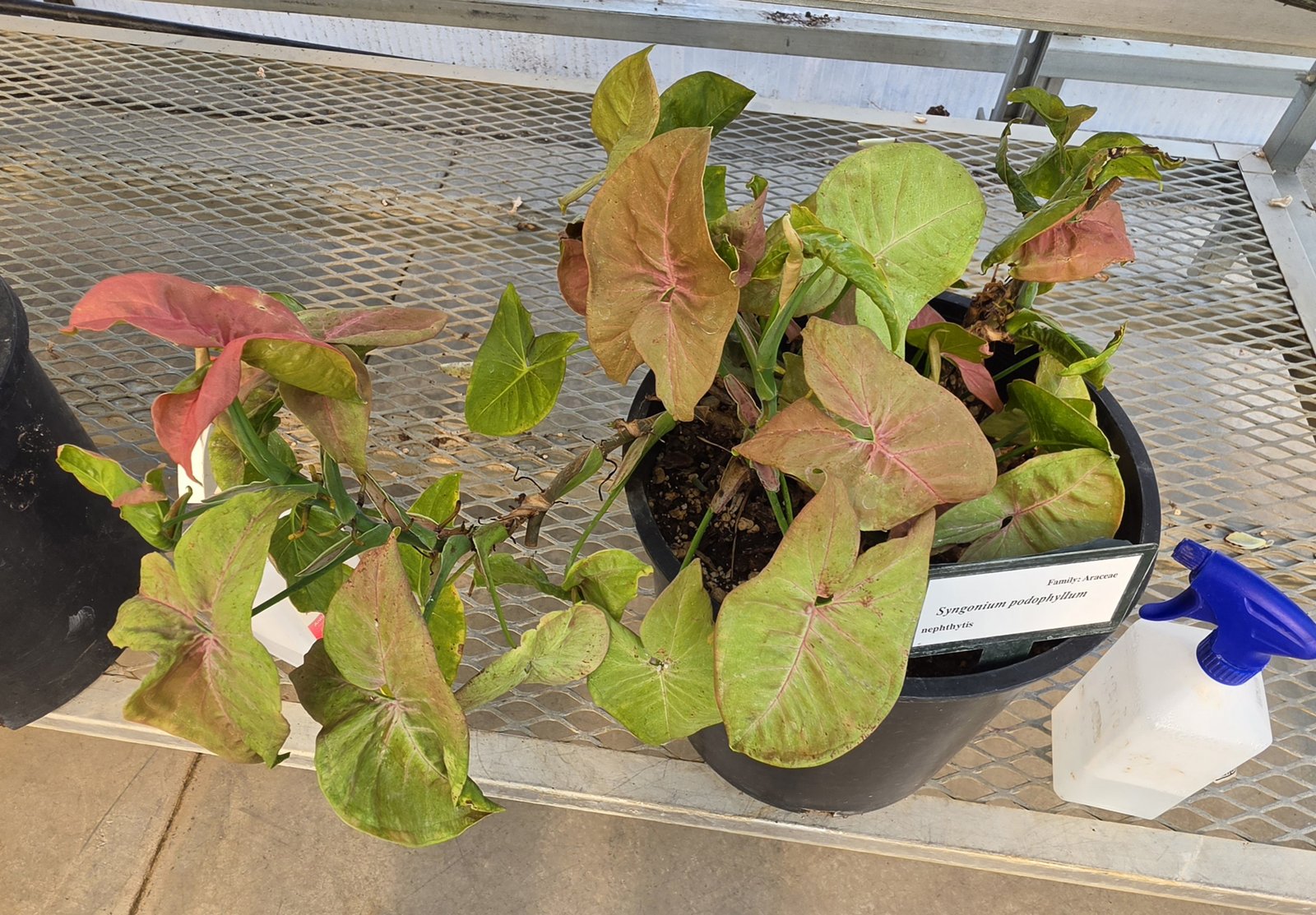
Syngonium podophyllum · Arrowhead plant (nephthytis)
CON-0087
📍 Location not set
Identification
Syngonium podophyllum · Arrowhead plant (nephthytis)
The plant is directly labeled with a plant tag reading 'Family: Araceae, Syngonium podophyllum, nephthytis,' which matches the visible morphology: arrow/heart-shaped leaves with prominent contrasting venation, pink-to-green coloration variation typical of Syngonium cultivars, a trailing/climbing vining habit, and simple undivided juvenile leaf blades consistent with this species. The pink pigmentation along veins and leaf margins is a common cultivar trait (e.g., 'Pink Allusion' or similar pink-variegated forms). Some leaves show stress discoloration (browning, curling) suggesting the plant is not in ideal health, possibly due to light or water stress, but the identification is confirmed by the accompanying label rather than leaf features alone. Similar genera that could be confused without the label include Philodendron (which lacks the sagittate juvenile leaf shape as pronounced) and other Araceae vines, but the tag removes ambiguity.
Generated 2026-08-15 06:04 by anthropic (claude-sonnet-5).
Health
Care Information
- Light
- Bright, indirect light is ideal, but it tolerates medium/lower light well; avoid direct sun which can bleach or scorch leaves.
- Water
- Water when the top 1-2 inches of soil are dry, roughly every 7-10 days; reduce frequency in winter.
- Nutrients
- Feed with a balanced liquid fertilizer diluted to half-strength monthly during spring-summer growth; skip in winter.
- Repotting
- Repot every 1-2 years in spring or when roots fill the pot; also benefits from a moss pole or trellis as it matures and vines.
- Soil media
- Well-draining aroid mix -- standard potting soil amended with perlite and some bark or peat.
- Temp & humidity
- 65-80F; moderate to high humidity (40-60%) preferred, but adapts reasonably well to average indoor conditions.
- Temperature range
- 🌡️ 65-80F
- Humidity range
- 💦 40-60%
- Care group
- 🏷️ Medium Light & Moderate Humidity
- Toxicity
- Contains calcium oxalate crystals; toxic if chewed or ingested by pets or people, causing mouth/throat irritation -- keep away from curious visitors and animals, and wear gloves when pruning as sap can irritate skin.
- Pests & diseases
- Fairly hardy; watch for spider mites and mealybugs in dry conditions, and root rot if overwatered or left in soggy soil.
- Propagation
- Very easy from stem cuttings with a node, rooted in water or moist soil; new roots typically appear within a couple of weeks.
Generated 2026-08-26 20:57 by anthropic (claude-sonnet-5).