Echeveria runyonii 'Topsy Turvy' · Topsy Turvy Echeveria
CON-0079
📍 Location not set
Identification
Echeveria runyonii 'Topsy Turvy' · Topsy Turvy Echeveria
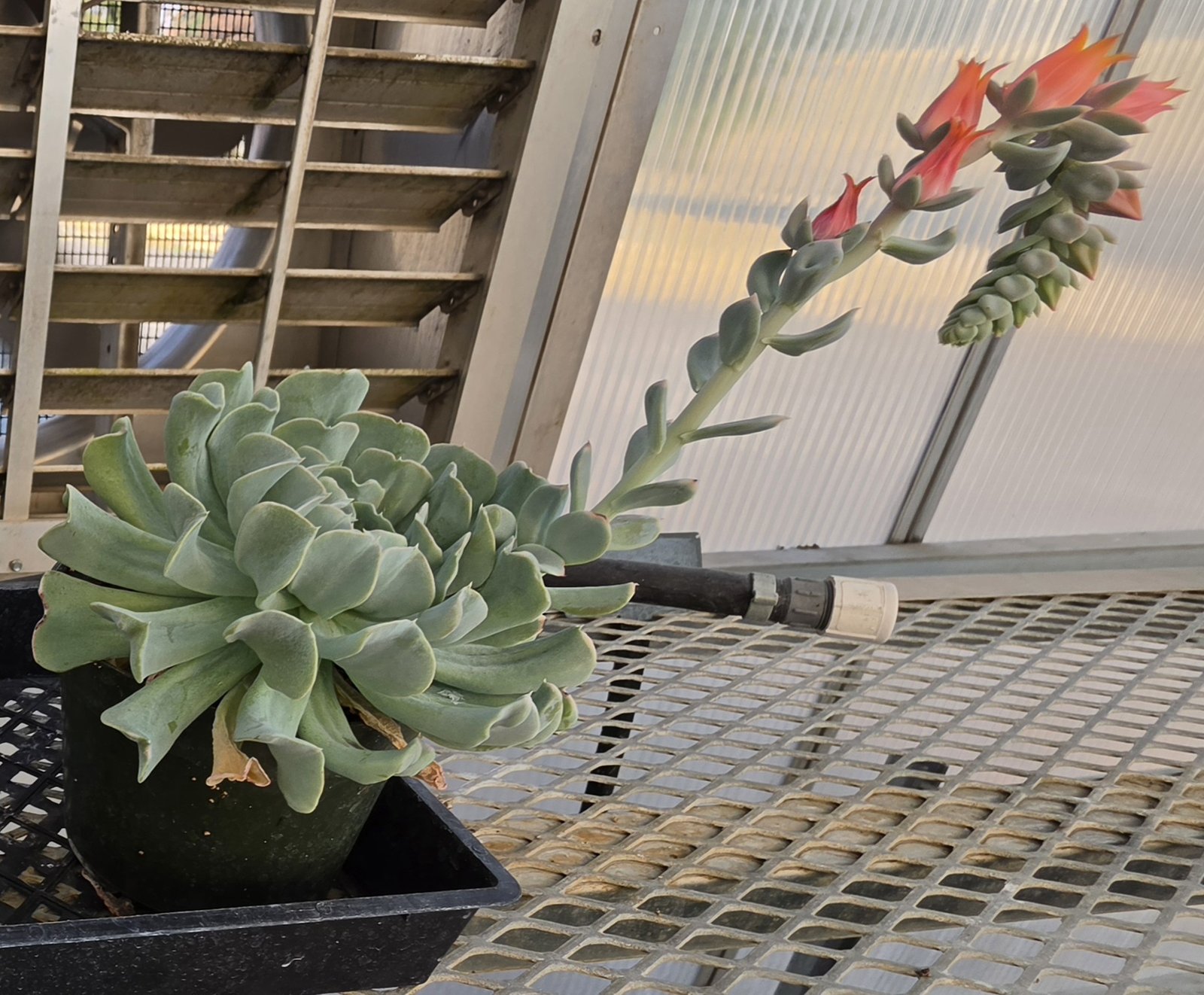
The rosette shows the characteristic folded, spoon-shaped, upward-curving glaucous blue-green leaves typical of 'Topsy Turvy', which distinguishes it from flat-leaved Echeveria cultivars. The plant has produced an arching inflorescence (cyme) with reddish-orange, urn-shaped flowers typical of Echeveria species, consistent with E. runyonii's known bloom. Growth habit (compact rosette in a small pot, thick succulent leaves with a waxy farina coating) also matches. Alternatives to rule out would include other glaucous Echeveria hybrids like 'Lola' or 'Perle von Nürnberg', but the strongly cupped/folded leaf form pointing upward is most distinctive of 'Topsy Turvy', supporting the requester's suspicion. A clearer close-up of a single leaf's margin and cross-section, plus a full flower stalk view, would increase certainty to 'certain'.
Generated 2026-10-06 05:01 by anthropic (claude-sonnet-5).
Health
Care Information
- Light
- Bright light is essential; a sunny south or west-facing spot, or several hours of direct sun, keeps rosettes tight and colorful. Too little light causes stretching (etiolation).
- Water
- Soak-and-dry method: water thoroughly, then let soil dry out completely before watering again, roughly every 10-14 days. Reduce watering significantly in winter.
- Nutrients
- Light feeding with a diluted balanced or cactus/succulent fertilizer monthly during spring and summer growing season; skip fertilizer entirely in fall and winter.
- Repotting
- Repot every 2 years or when the plant outgrows its pot; best done in spring. Roots are shallow, so a wide, shallow pot works well.
- Soil media
- Cactus/succulent mix with added perlite or pumice for sharp drainage.
- Temp & humidity
- 65-75F ideal; tolerates a range from 40-90F but should be protected from frost. Low humidity is preferred (30-50%) -- avoid damp, stagnant air.
- Temperature range
- 🌡️ 65-75F
- Humidity range
- 💦 30-50%
- Care group
- 🏷️ Bright & Dry
- Toxicity
- No known toxicity concerns for pets or people; safe for public-facing displays.
- Pests & diseases
- Watch for mealybugs nestled between leaves; root and stem rot is the main risk if overwatered or if water sits on leaves. Generally pest-resistant when kept dry and bright.
- Propagation
- Very easy from leaf cuttings -- gently twist off a healthy leaf, let it callus for a day or two, then lay on top of dry succulent soil until roots and a new rosette form. Offsets can also be separated and potted directly.
Generated 2026-08-27 20:48 by anthropic (claude-sonnet-5).