Pelargonium graveolens · Rose-scented geranium
CON-0064
📍 Location not set
Identification
Pelargonium graveolens · Rose-scented geranium
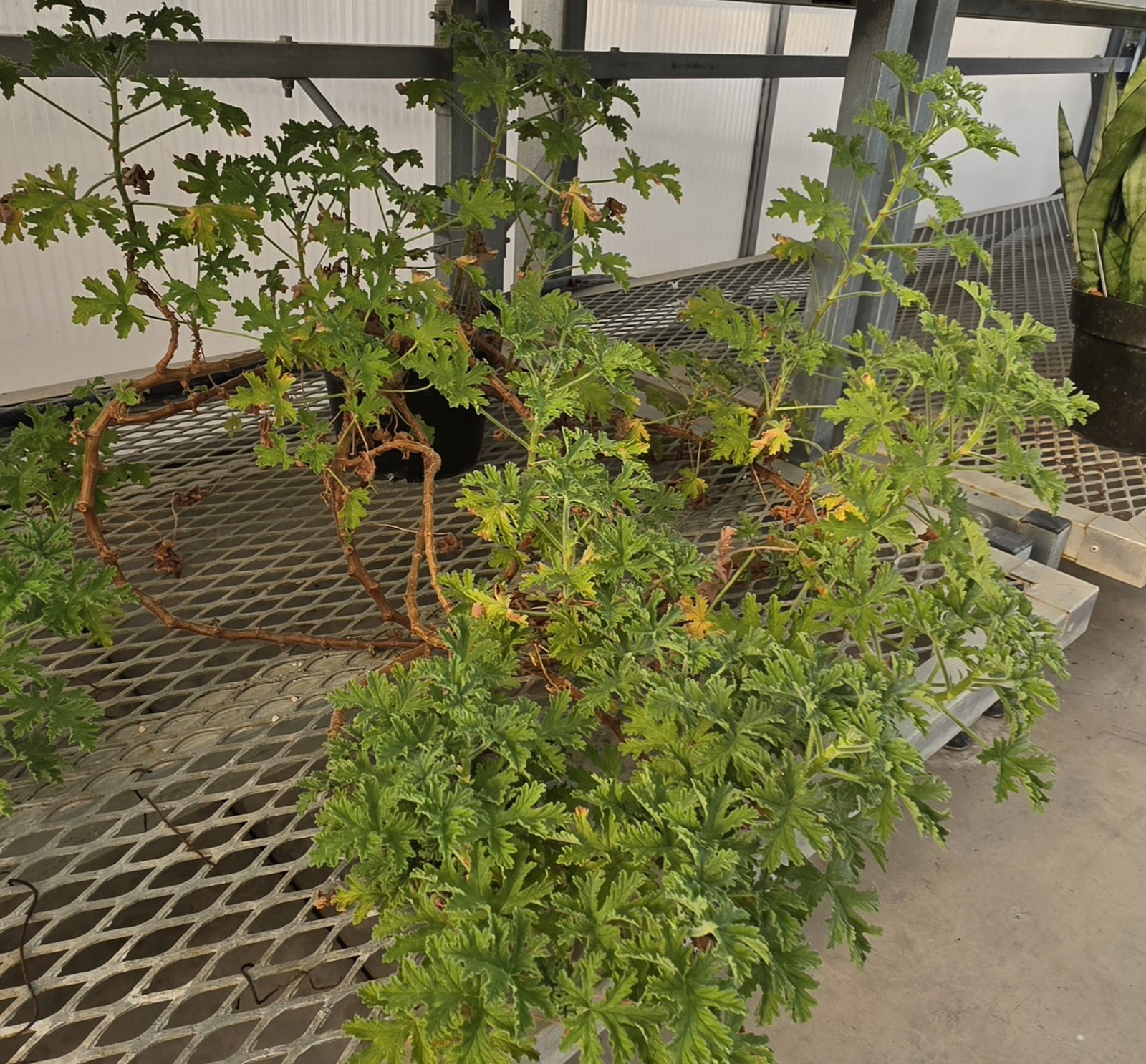
The plant shows deeply lobed, palmate, fuzzy-looking leaves with serrated/toothed margins on somewhat sprawling, semi-woody stems that have become trailing and slightly leggy (typical of a leggy greenhouse-grown scented geranium). The leaf shape—soft green, multi-lobed with crinkled edges—is consistent with Pelargonium graveolens, which is commonly grown in conservatories for its rose-scented foliage. The woody, trailing older stems with newer green growth also match how this species behaves when it becomes overgrown or leggy in a pot. Without a flower or a scent test, I can't rule out other scented pelargoniums such as P. capitatum, P. radens, or P. 'Graveolens' hybrids, which have similar dissected leaves, so I'm not fully certain. A close-up of the flower (small pink/lilac blooms with darker veining if P. graveolens) or crushed-leaf scent (rose vs. citronella/mint) would help confirm species-level identification.
Generated 2026-08-27 20:30 by anthropic (claude-sonnet-5).
Health
Care Information
- Light
- Full sun to bright light for at least a few hours daily; leggy, sparse growth means it needs more light.
- Water
- Let soil dry out between waterings; water thoroughly then allow the top 1-2 inches to dry before watering again. Prone to root rot if kept too wet, especially in winter.
- Nutrients
- Light balanced liquid fertilizer every 4-6 weeks during spring and summer growth; withhold in winter.
- Repotting
- Repot every 1-2 years in spring, or when rootbound; this plant can get woody and benefits from occasional pruning back at repotting.
- Soil media
- Well-draining potting mix with added perlite or sand; avoid heavy, water-retentive soils.
- Temp & humidity
- 60-75F; low to moderate humidity (30-50%) - good air circulation is more important than humidity for this Mediterranean-origin plant.
- Temperature range
- 🌡️ 60-75F
- Humidity range
- 💦 30-50%
- Care group
- 🏷️ Bright & Dry
- Toxicity
- Mildly toxic to cats and dogs if ingested (essential oils/geraniol); the fragrant leaves are not typically an issue for people but keep away from pets that chew foliage.
- Pests & diseases
- Watch for whiteflies, aphids, and occasional spider mites; overly damp conditions or poor airflow can lead to fungal leaf spot or root rot.
- Propagation
- Stem cuttings root easily in well-draining soil or water; take 3-4 inch cuttings below a node and let the cut end callus slightly before planting.
Generated 2026-08-27 20:30 by anthropic (claude-sonnet-5).