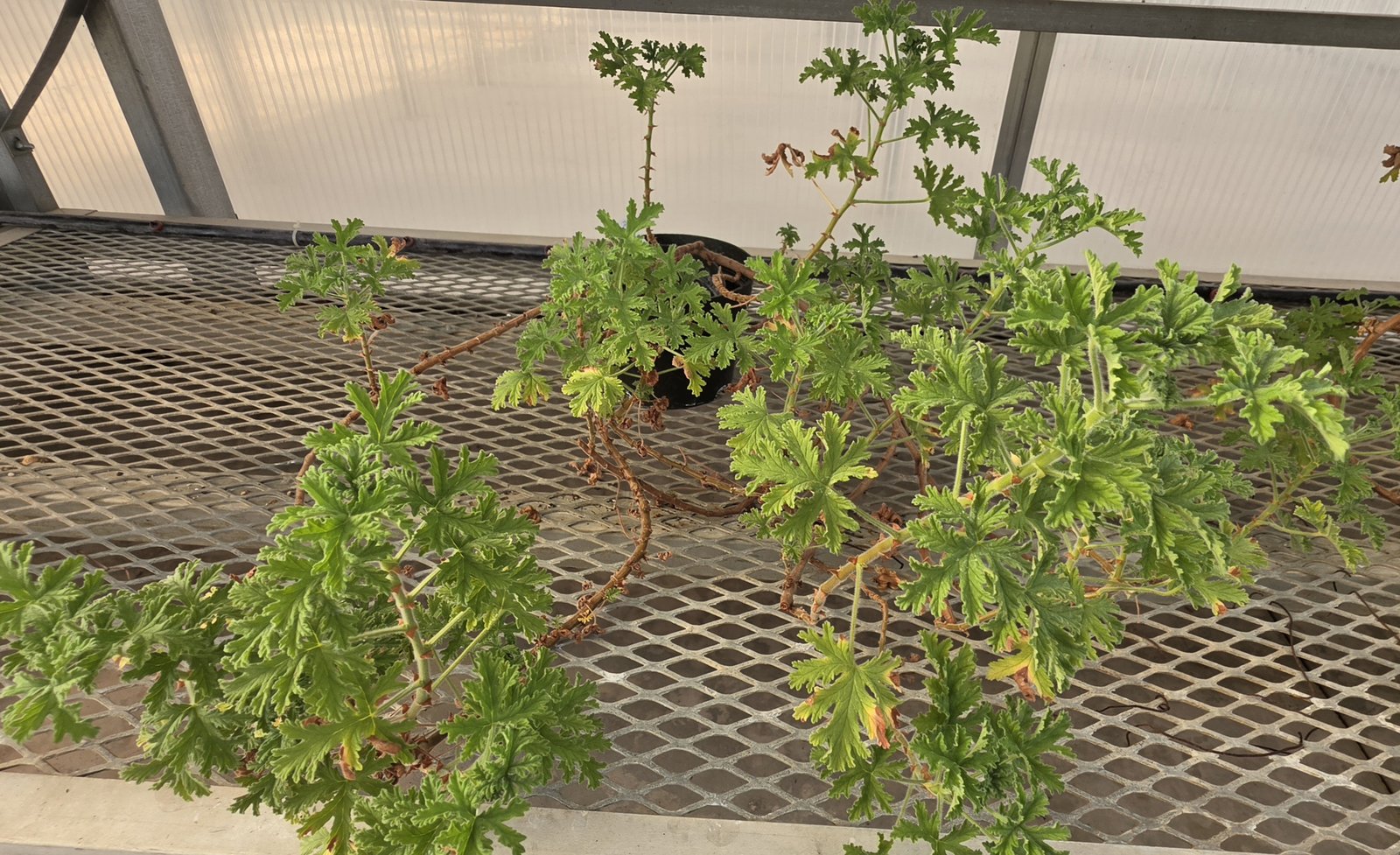
Pelargonium graveolens · Rose-scented geranium
CON-0063
📍 Location not set
Identification
Pelargonium graveolens · Rose-scented geranium
The plants show deeply lobed, palmately divided leaves with serrated, ruffled margins, a soft grayish-green color, and a sprawling, semi-woody growth habit with somewhat brittle, jointed stems - all characteristic of scented-leaf Pelargonium species grown in greenhouse/nursery settings. The leaf texture appears slightly pubescent (fuzzy), which is typical of rose or citronella-scented geraniums. The lack of visible flowers makes exact species identification difficult, as several scented Pelargonium species (P. graveolens, P. capitatum, P. citronellum, and hybrids like 'Citrosa') have very similar dissected foliage. A photo showing flower color/structure and a close-up of leaf scent glands or trichomes would help confirm the exact species versus these look-alikes.
Generated 2026-08-27 20:27 by anthropic (claude-sonnet-5).
Health
Care Information
- Light
- Full sun to bright light for at least 4-6 hours daily; leggy, weak growth and poor scent indicate insufficient light.
- Water
- Allow soil to dry out between waterings; water thoroughly then let the top 2 inches dry before watering again. Prone to root rot if kept too wet.
- Nutrients
- Light feeding with a balanced liquid fertilizer every 4-6 weeks during spring and summer; avoid heavy nitrogen which reduces fragrance and blooms.
- Repotting
- Repot every 1-2 years in spring, or when rootbound; this plant can get woody and benefits from occasional pruning/refreshing.
- Soil media
- Well-draining potting mix with added perlite or sand; avoid heavy, water-retentive soils.
- Temp & humidity
- 60-75F; low to moderate humidity -- this Mediterranean-climate plant prefers drier air and good airflow, not misting.
- Temperature range
- 🌡️ 60-75F
- Humidity range
- 💦 30-50%
- Care group
- 🏷️ Bright & Dry
- Toxicity
- Mildly toxic to cats and dogs if ingested (contains geraniol and linalool); the fragrant oils can also cause skin irritation in sensitive people -- handle with care in areas with pets or young visitors.
- Pests & diseases
- Generally hardy; watch for whiteflies, aphids, and spider mites, especially in dry indoor air. Root rot and fungal issues (botrytis) occur if overwatered or in stagnant humid conditions.
- Propagation
- Very easy from stem cuttings -- take a 3-4 inch cutting below a node, let the cut end callus for a few hours, then root in slightly moist well-draining soil or water.
Generated 2026-08-27 20:27 by anthropic (claude-sonnet-5).