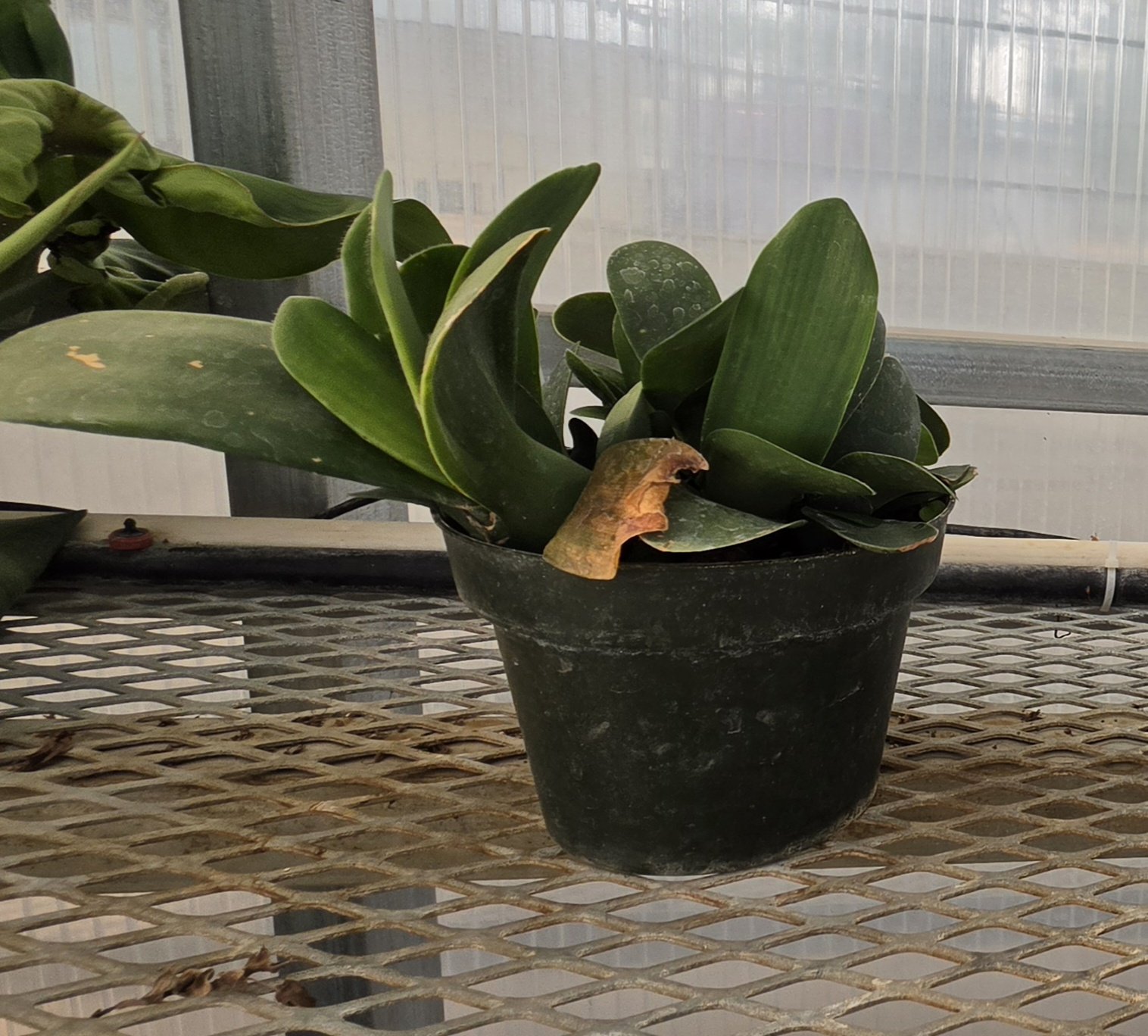
Haemanthus albiflos · Common paintbrush lily (or shaving-brush lily)
CON-0046
📍 Location not set
Identification
Haemanthus albiflos · Common paintbrush lily (or shaving-brush lily)
The plant shows thick, fleshy, strap-shaped leaves arranged in a basal, fan-like pattern with rounded to slightly pointed tips and a smooth, leathery, somewhat glaucous surface with fine speckling - typical of Haemanthus albiflos. There is a dried, papery brown leaf base persisting at the center of the rosette, a characteristic feature of Haemanthus as old leaves die back and remain attached at the bulb neck. The leaves lack the glossy, more elongated, slightly waxy appearance and alternating distichous arrangement typical of Phalaenopsis (which was already ruled out), and there's no sign of the aerial roots or flower spike typical of that orchid genus. The succulent thickness and fan-like symmetry of the leaves are more consistent with a bulbous Amaryllidaceae species like Haemanthus than an epiphytic orchid. To increase confidence, a photo showing the leaf base/bulb, leaf margin (Haemanthus albiflos often has fine cilia/hairs on the margin), or ideally a flower (Haemanthus has a distinctive brush-like white/pink inflorescence) would help confirm the exact species versus similar-looking Clivia or other strap-leaved bulbous plants.
Generated 2026-08-24 22:55 by anthropic (claude-sonnet-5).
Health
Care Information
- Light
- Bright indirect light is ideal, but it tolerates medium/lower light well; avoid intense direct sun which can scorch the broad strap-like leaves.
- Water
- Water moderately, letting the top inch or two of soil dry out between waterings; this bulb stores water and is prone to rot if kept soggy, especially in winter.
- Nutrients
- Feed with a diluted balanced liquid fertilizer monthly during spring and summer growth; withhold feeding in winter.
- Repotting
- Repot only every 2-3 years, or when clearly rootbound -- this plant actually prefers being slightly pot-bound and blooms better when snug.
- Soil media
- Well-draining standard potting mix with extra perlite or coarse sand to prevent the bulb from sitting in wet soil.
- Temp & humidity
- 60-75F is ideal with average room humidity; it's tolerant of drier air and cooler winter conditions (down to ~50F) during its semi-dormant period.
- Temperature range
- 🌡️ 60-75F
- Humidity range
- 💦 30-50%
- Care group
- 🏷️ Low Light & Dry
- Toxicity
- All parts contain alkaloids that are toxic if ingested by pets or people; also can cause mild skin irritation from sap -- keep away from curious visitors and pets.
- Pests & diseases
- Generally trouble-free and quite hardy; watch for mealybugs or scale in the leaf axils, and bulb/root rot if overwatered or grown in poorly draining soil.
- Propagation
- Easiest by division -- separate offset bulbs from the parent clump at repotting time, ensuring each has roots attached.
Generated 2026-08-24 22:56 by anthropic (claude-sonnet-5).