Anthurium plowmanii · Anthurium Ruffles (Ruffled Anthurium)
CON-0028
📍 Location not set
Identification
Anthurium plowmanii · Anthurium Ruffles (Ruffled Anthurium)
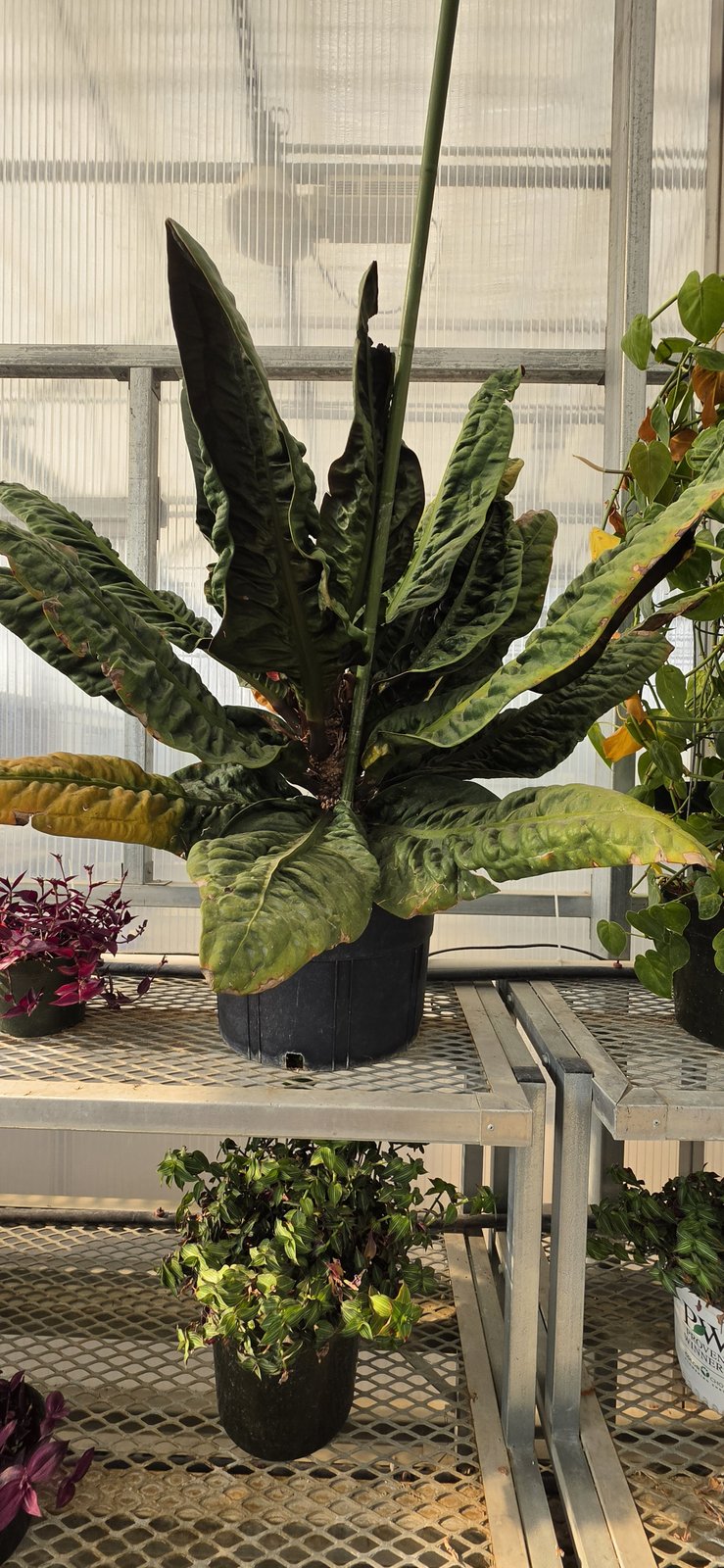
The plant shows a basal rosette of long, strap-shaped, leathery leaves with strongly undulating/ruffled margins and a heavily corrugated (bullate) surface texture, arising from a short central stem with thick petioles - a growth habit and leaf texture very characteristic of Anthurium plowmanii, a species often called 'Anthurium Ruffles' that is commonly grown in exactly this kind of nursery/greenhouse setting. This differs from the previously rejected Xanthosoma and Alocasia identifications: the leaves here are consistently narrow and lance-shaped rather than broadly sagittate/arrow-shaped or peltate as in Xanthosoma and most Alocasia, and they lack the classic ear-shaped basal lobes seen in those genera. The tall central shaft visible behind the leaves could be an emerging inflorescence spadix/spathe stalk typical of Anthurium rather than a new unfurling leaf. That said, I can't fully rule out other large-leaved aroids with similar ruffled, quilted foliage (e.g., certain Philodendron or Homalomena species), and without a clear view of the petiole attachment point, leaf venation pattern, or any inflorescence/spathe detail, I can't be fully certain of the species. A close-up of the leaf base/petiole junction, the underside venation, or a flowering structure would help confirm or rule this out.
Generated 2026-08-14 20:21 by anthropic (claude-sonnet-5).
Health
Care Information
- Light
- Bright, filtered indirect light; an east or shaded south window works well, but keep out of direct sun which will scorch the large leaves.
- Water
- Allow the top 1-2 inches of mix to dry out between waterings, then water thoroughly; reduce frequency in cooler winter months to avoid soggy roots.
- Nutrients
- Feed with a balanced liquid fertilizer diluted to half-strength monthly during spring through fall growing season; withhold or reduce in winter.
- Repotting
- Repot every 2 years or when roots fill the pot and start emerging from drainage holes, ideally in spring; this species enjoys being slightly snug.
- Soil media
- Chunky, well-draining aroid mix -- combine orchid bark, perlite, and coarse peat or coco coir -- to mimic its semi-epiphytic habit and prevent waterlogging.
- Temp & humidity
- Warm tropical range of 65-85F, avoid temperatures below 55F; high humidity (60%+) is ideal for the best leaf size and texture, so mist or use a humidifier/pebble tray in drier rooms.
- Temperature range
- 🌡️ 65-85F
- Humidity range
- 💦 60%+
- Care group
- 🏷️ Bright & Humid
- Toxicity
- Contains calcium oxalate crystals; sap and plant parts are toxic if ingested and can irritate skin/mouth, so wear gloves when pruning and keep away from curious pets or small children in public areas.
- Pests & diseases
- Watch for spider mites and mealybugs, especially in low-humidity conditions; root rot can develop quickly if overwatered or mix stays soggy, so ensure good drainage.
- Propagation
- Not recorded
Generated 2026-08-15 05:40 by anthropic (claude-sonnet-5).