Nephrolepis exaltata · Boston fern
CON-0020
📍 Location not set
Identification
Nephrolepis exaltata · Boston fern
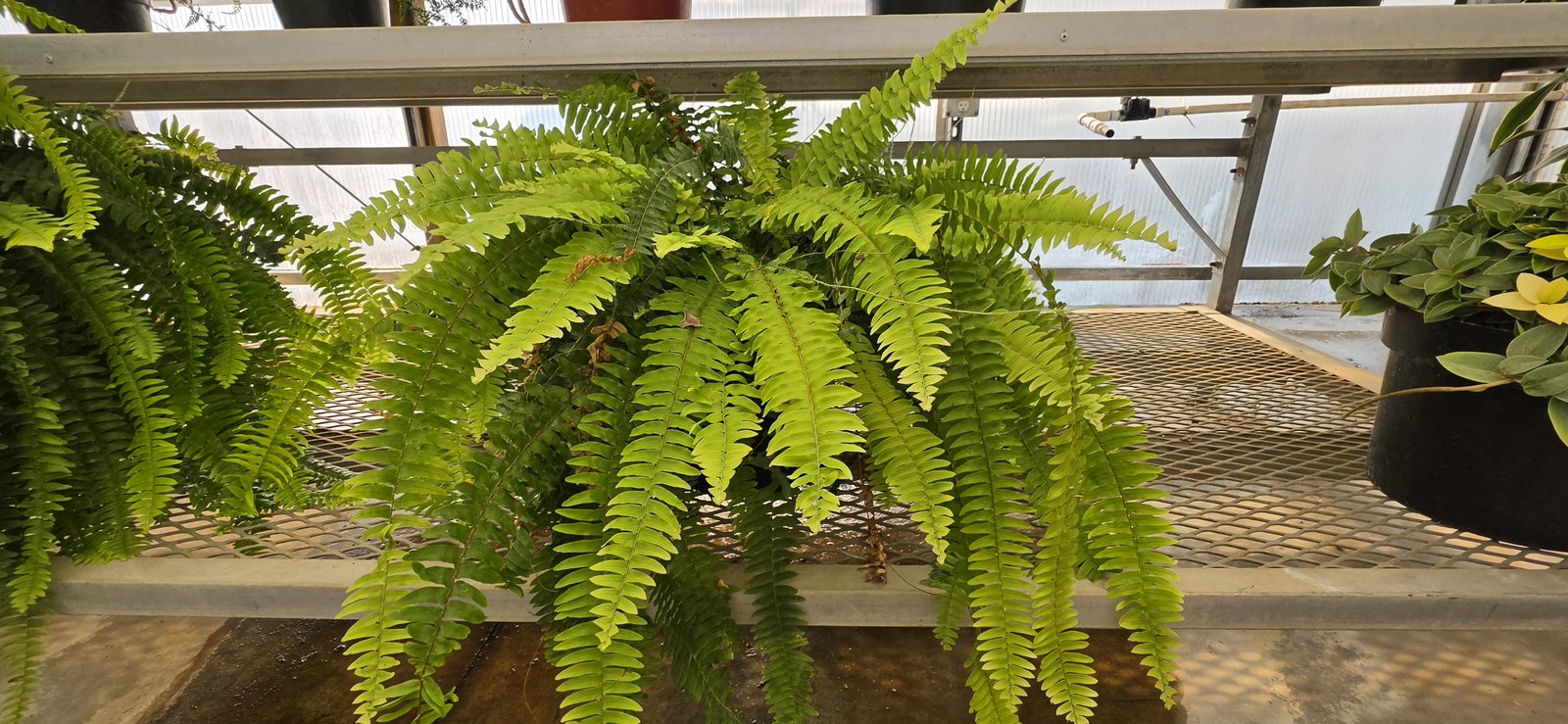
The plant shows the classic Nephrolepis growth habit: arching, pinnately divided fronds with numerous closely spaced, narrow, sword-shaped pinnae (leaflets) attached along a central rachis. The pinnae have finely serrated margins and taper to a point, and the fronds cascade downward from a hanging pot, typical of Boston fern cultivars grown in greenhouse/nursery settings. The overall lush, dense, trailing form and light-to-medium green coloration are consistent with Nephrolepis exaltata 'Bostoniensis' or a closely related cultivar. Similar species to rule out include other Nephrolepis cultivars (e.g., N. exaltata 'Fluffy Ruffles' or 'Dallas') which have more crisped or compact pinnae, as well as Polystichum or Pteris ferns, but the simple pinnate (non-fringed) leaflet shape and hanging habit here best match standard Boston fern. A closer image of the frond tip, sori (spore) arrangement on the underside, and rhizome/runner structure would help confirm the exact cultivar.
Generated 2026-08-13 16:33 by anthropic (claude-sonnet-5).
Health
Care Information
- Light
- Medium, indirect light; avoid direct sun which scorches fronds, but too little light causes sparse growth.
- Water
- Keep soil consistently moist but not soggy; water when the top of the soil just starts to feel dry, typically once or twice a week.
- Nutrients
- Feed with a diluted balanced liquid fertilizer monthly during spring through fall; withhold in winter.
- Repotting
- Repot annually or every other year in spring once roots fill the pot; Boston ferns are vigorous growers and often become rootbound.
- Soil media
- Rich, well-draining potting mix with peat or coco coir for good moisture retention.
- Temp & humidity
- 65-75F; high humidity (50%+) -- mist regularly or use a humidity tray, as dry air causes browning frond tips.
- Temperature range
- 🌡️ 65-75F
- Humidity range
- 💦 50%+
- Care group
- 🏷️ Low Light & Humid
- Toxicity
- Non-toxic to cats, dogs, and humans -- safe for public areas.
- Pests & diseases
- Watch for spider mites, mealybugs, and scale, especially in dry air; root rot if overwatered or left in standing water.
- Propagation
- Divide the crown/rootball into sections with fronds and roots attached at repotting time; runners (stolons) with plantlets can also be pinned into soil to root.
Generated 2026-08-24 23:10 by anthropic (claude-sonnet-5).