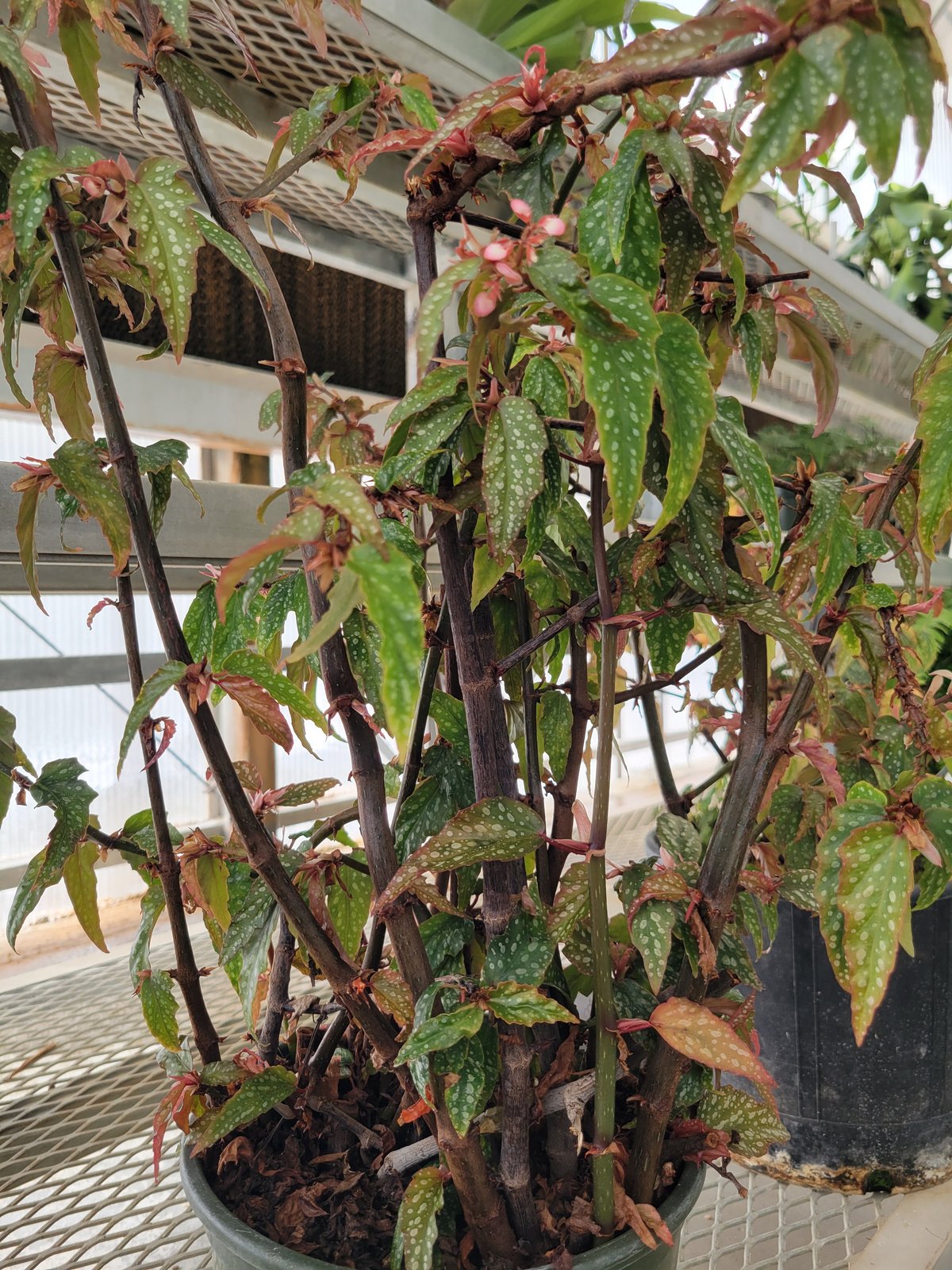
Begonia corallina 'Lucerna' · Angelwing begonia
CON-0016
📍 Location not set
Identification
Begonia corallina 'Lucerna' · Angelwing begonia
The plant has a printed label directly in the pot reading 'Begonia corallina Lucerna, Family: Begoniaceae, angelwing begonia,' which is a reliable institutional identification. The visual characteristics also match: cane-like stems, asymmetric olive-green leaves with silvery white spots along the veins, and reddish leaf undersides/margins typical of angelwing begonias. The plant appears somewhat stressed (drooping, some leaf discoloration/browning), likely due to underwatering or transplant stress, but the identifying features (spotted foliage pattern, cane growth habit, leaf shape) remain consistent with this well-known begonia cultivar.
Generated 2026-08-24 22:56 by anthropic (claude-sonnet-5).
Health
Care Information
- Light
- Bright, indirect light; an east or filtered south/west window suits it well, but avoid harsh direct sun which can scorch the large leaves.
- Water
- Water when the top inch of soil feels dry, roughly every 7-10 days; let it dry a bit more between waterings in winter to avoid rot.
- Nutrients
- Feed with a balanced liquid fertilizer diluted to half strength every 3-4 weeks during spring through fall; stop or reduce to monthly in winter.
- Repotting
- Repot every 1-2 years in spring, or once roots fill the pot; this cane-type begonia doesn't mind being slightly snug.
- Soil media
- Well-draining, rich potting mix -- a standard potting soil amended with perlite and some organic matter works well.
- Temp & humidity
- 65-80F; moderate to high humidity (40-60%) -- a pebble tray or nearby humidifier helps, though it tolerates average indoor humidity better than many begonias.
- Temperature range
- 🌡️ 65-80F
- Humidity range
- 💦 40-60%
- Care group
- 🏷️ Bright & Humid
- Toxicity
- Contains calcium oxalate crystals; mildly toxic if chewed or ingested by pets or people, causing mouth/throat irritation -- keep away from curious pets and small children.
- Pests & diseases
- Watch for powdery mildew and botrytis in stagnant humid air, and spider mites/mealybugs in dry conditions; overwatering leads to stem and root rot, so ensure good drainage and airflow.
- Propagation
- Stem cuttings root readily in water or moist soil -- take a cutting with a few nodes and a leaf, and cane-type begonias like this one propagate especially easily this way.
Generated 2026-08-24 22:57 by anthropic (claude-sonnet-5).