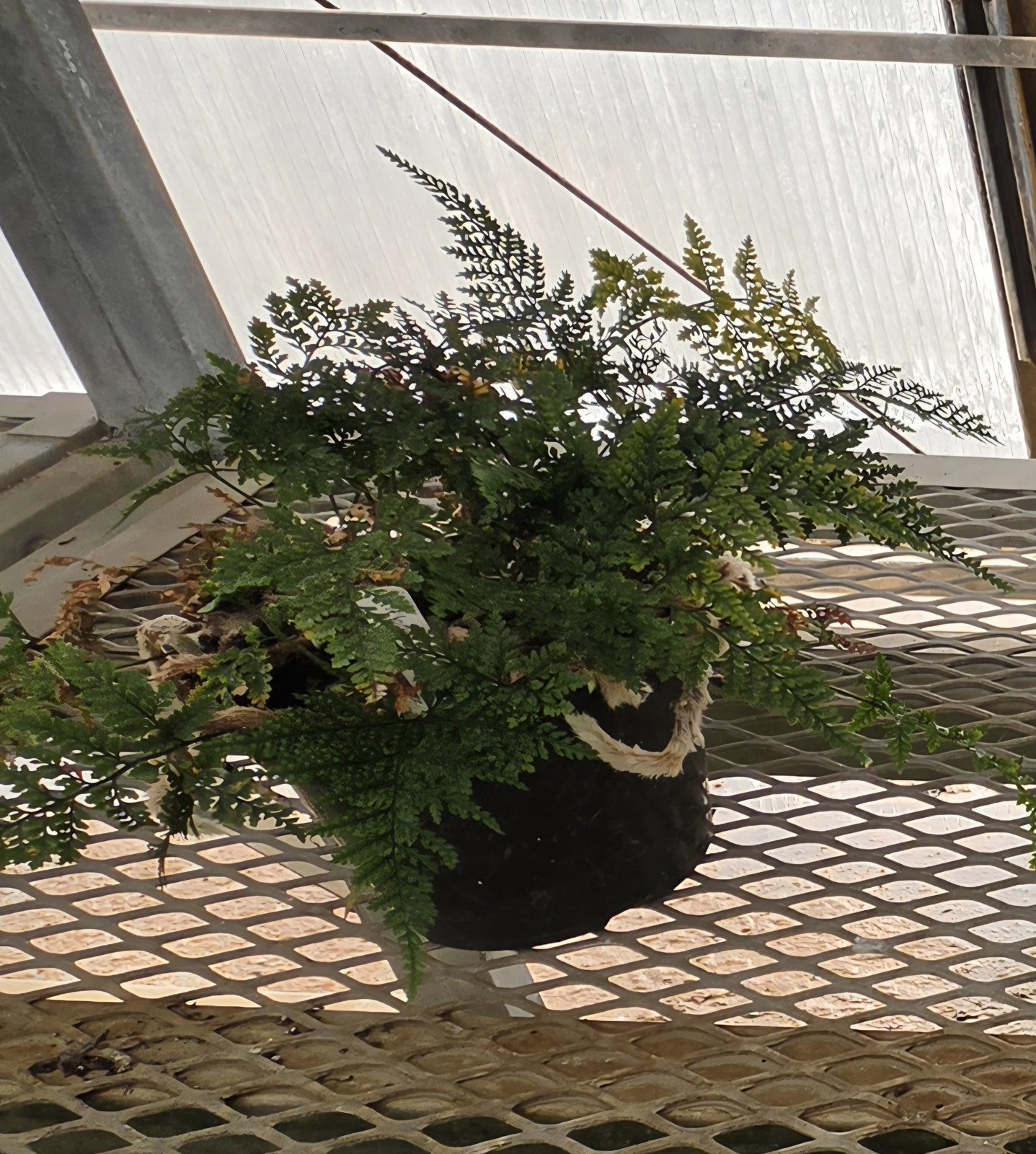
Davallia fejeensis · Rabbit's Foot Fern
CON-0015
📍 Location not set
Identification
Davallia fejeensis · Rabbit's Foot Fern
The plant shows finely divided, lacy, triangular fronds with a soft, feathery texture typical of Davallia species, growing from a mounded mass in a hanging pot—consistent with the rhizomatous, epiphytic growth habit of Davallia fejeensis. The fuzzy, pale rhizomes visible creeping over the pot rim (partially obscured by soil/debris) are a hallmark of this species, giving it the common name 'rabbit's foot fern.' The overall bushy, cascading habit suits a hanging basket display as seen here. However, the rhizomes aren't clearly visible enough in this image to fully distinguish from similar lacy ferns like Humata tyermanii (white rabbit's foot fern) or Davallia trichomanoides, which have similar frond dissection but different rhizome scale coloration. Given the requester's suspicion and the consistent frond morphology and growth form, I lean toward confirming Davallia fejeensis, but a close-up of the rhizome scales and pinnae margins would increase certainty.
Generated 2026-08-27 15:55 by anthropic (claude-sonnet-5).
Health
Care Information
- Light
- Bright, indirect light; avoid direct sun which can bleach or scorch the delicate fronds.
- Water
- Keep soil lightly moist but never soggy; water when the top of the mix begins to dry out, about once a week, less in winter.
- Nutrients
- Feed with a diluted balanced liquid fertilizer monthly during spring through fall; skip feeding in winter.
- Repotting
- Repot every 1-2 years in spring, or when the rhizomes outgrow the pot -- rabbit's foot fern rhizomes like to grow along the soil surface and even over the pot edge.
- Soil media
- Loose, well-draining, peat-based mix with added perlite or orchid bark; good aeration is key since rhizomes sit on top of the soil.
- Temp & humidity
- 65-80F; high humidity (50-70%) -- mist regularly or use a pebble tray/humidifier, especially in drier conservatory zones.
- Temperature range
- 🌡️ 65-80F
- Humidity range
- 💦 50-70%
- Care group
- 🏷️ Low Light & Humid
- Toxicity
- No known toxicity concerns for pets or people; safe near visitors and volunteers.
- Pests & diseases
- Generally hardy; watch for occasional scale or mealybugs, and root/rhizome rot if overwatered or if the furry rhizomes are buried too deep.
- Propagation
- Divide the fuzzy rhizomes at repotting -- cut a section with at least one growth tip and root, lay it on moist soil surface (don't bury) and keep humid until new fronds emerge.
Generated 2026-08-27 15:55 by anthropic (claude-sonnet-5).