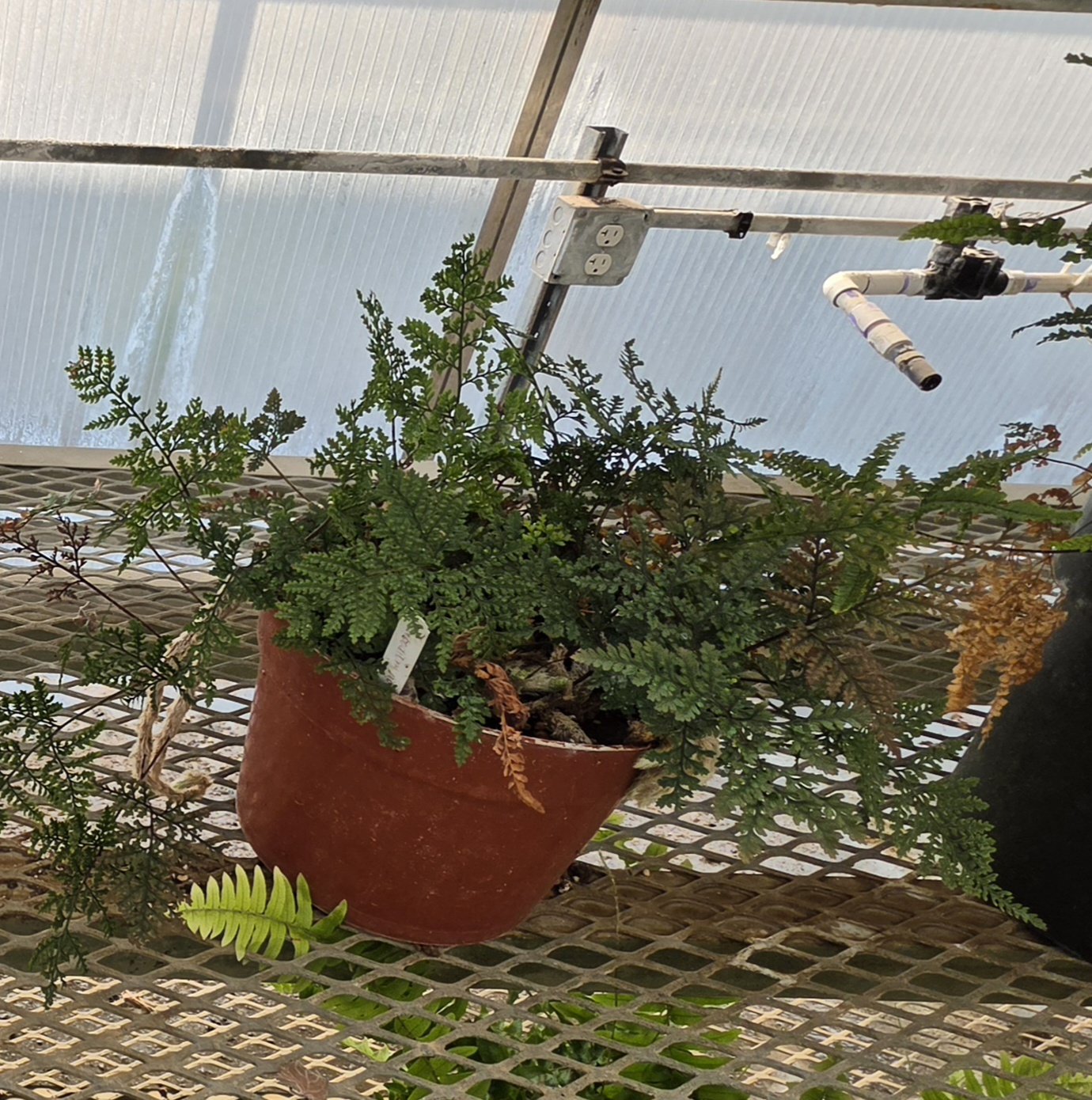
Davallia fejeensis · Rabbit's foot fern
CON-0013
📍 Location not set
Identification
Davallia fejeensis · Rabbit's foot fern
The plant is growing in a hanging pot with a dense, cascading mound of finely divided (tripinnate), lacy, blue-green fronds with small rounded pinnules - a growth habit and frond texture typical of Davallia species rather than a climbing/twining fern like Lygodium japonicum (which was ruled out and would show elongated, indeterminate climbing rachises rather than this compact, radiating frond arrangement). The fine dissection and soft, feathery texture are consistent with Davallia fejeensis (rabbit's foot fern), a common conservatory hanging-basket fern, though similar-looking relatives such as Davallia trichomanoides, Humata tyermanii (bear's paw fern), or even a finely-cut Nephrolepis cultivar could produce a comparable look. No visible furry rhizomes creeping over the pot rim (a diagnostic Davallia feature) are clearly discernible in this image, which limits certainty. A closer photo showing the rhizome texture (scaly vs. furry), sorus placement on the frond underside, and pinnule shape/margin would help confirm the exact genus and species.
Generated 2026-08-15 06:12 by anthropic (claude-sonnet-5).
Health
Care Information
- Light
- Bright, indirect light or dappled shade; avoid direct sun which can scorch the delicate fronds.
- Water
- Keep soil evenly moist at all times; do not let it dry out completely, but avoid waterlogging.
- Nutrients
- Dilute balanced liquid fertilizer monthly during spring through summer; skip feeding in fall and winter.
- Repotting
- Repot every 1-2 years in spring when roots fill the pot, using a slightly larger container.
- Soil media
- Loose, well-draining, humus-rich potting mix -- standard potting soil amended with peat/coir and perlite works well.
- Temp & humidity
- 60-75F; high humidity (50-70%+) -- mist regularly or place on a pebble tray, especially in drier rooms.
- Temperature range
- 🌡️ 60-75F
- Humidity range
- 💦 50-70%
- Care group
- 🏷️ Low Light & Humid
- Toxicity
- No known toxicity concerns for pets or people.
- Pests & diseases
- Generally trouble-free, but watch for scale and mealybugs; fronds can develop brown crispy tips if humidity is too low or if exposed to direct sun/drafts.
- Propagation
- Divide clumps at the rhizome during repotting, ensuring each division has roots and fronds attached.
Generated 2026-08-21 17:37 by anthropic (claude-sonnet-5).