Plectranthus amboinicus · Cuban oregano (Mexican mint)
CON-0010
📍 Location not set
Identification
Plectranthus amboinicus · Cuban oregano (Mexican mint)
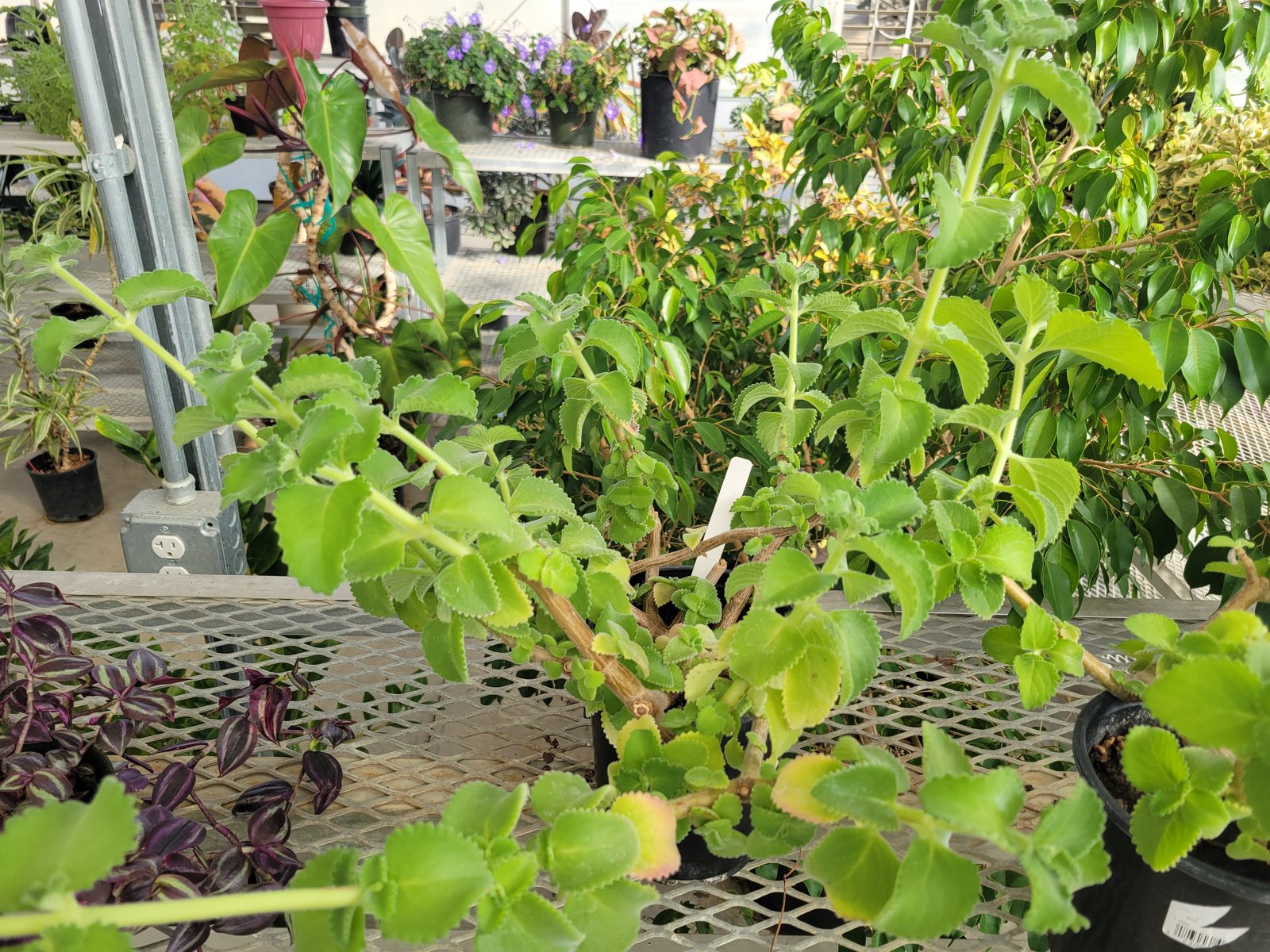
The plant shows thick, succulent, fuzzy-looking leaves with strongly scalloped/crenate margins arranged oppositely along fleshy, somewhat woody stems, which is consistent with Plectranthus amboinicus (Cuban oregano). The bright chartreuse coloration is typical of the golden/variegated cultivars of this species often grown in conservatories. Growth habit is sprawling with semi-succulent stems, also matching this species. Alternatives to rule out would include other Plectranthus species (e.g., P. verticillatus or P. forsteri 'Marginatus') or Coleus (Plectranthus scutellarioides) cultivars with similar scalloped leaves, but the thick succulent texture and uniform chartreuse color without dark leaf patterning favor P. amboinicus. A close-up of the leaf surface (to check for the characteristic velvety/hairy texture and thickness) and a whiff test for the pungent oregano-like scent would confirm identification with certainty.
Generated 2026-08-21 17:41 by anthropic (claude-sonnet-5).
Health
Care Information
- Light
- Bright, indirect light; some morning sun is fine but protect from harsh direct midday sun which can scorch the leaves.
- Water
- Allow the top inch or so of soil to dry between waterings; water thoroughly then let excess drain away, and reduce frequency in cooler months.
- Nutrients
- Feed with a balanced liquid houseplant fertilizer diluted to half-strength every 4-6 weeks during active growth in spring and summer; withhold in winter.
- Repotting
- Repot every 1-2 years in spring using a well-draining potting mix, or sooner if roots are crowding the pot.
- Soil media
- Well-draining standard potting mix with added perlite or coarse sand.
- Temp & humidity
- 65-80F; moderate humidity (40-60%) is sufficient - no special misting required, though it appreciates some ambient moisture.
- Temperature range
- 🌡️ 65-80F
- Humidity range
- 💦 40-60%
- Care group
- 🏷️ Medium Light & Moderate Humidity
- Toxicity
- Like many Plectranthus/Lamiaceae members, foliage may cause mild stomach upset if ingested and the aromatic sap can occasionally irritate sensitive skin; keep away from pets and small children as a precaution.
- Pests & diseases
- Watch for mealybugs and spider mites, especially in dry indoor air; also prone to stem rot or root rot if overwatered or kept in soggy soil.
- Propagation
- Very easy from stem cuttings -- root in water or moist soil within 1-2 weeks.