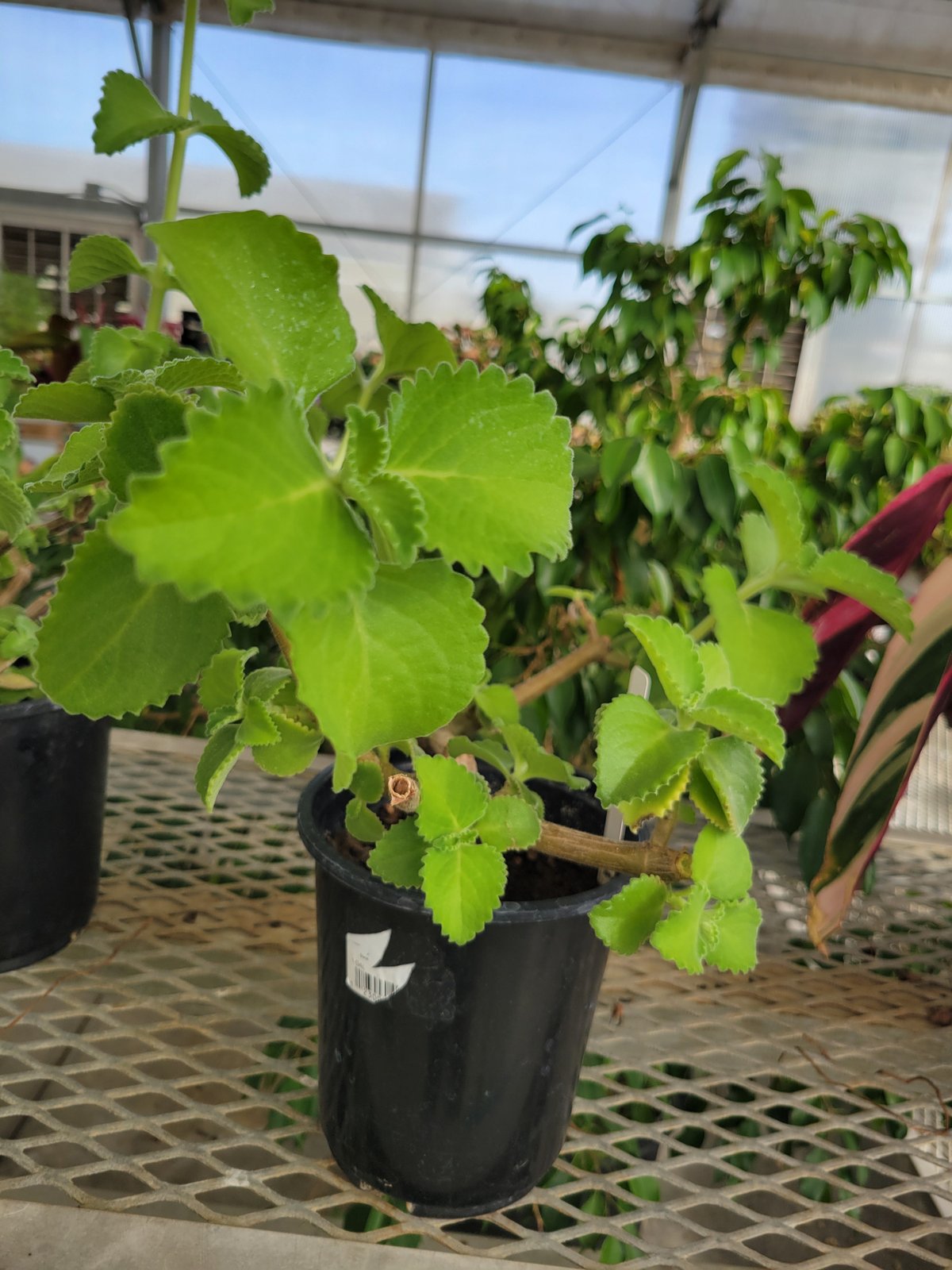
Plectranthus amboinicus · Cuban oregano (Indian borage)
CON-0009
📍 Location not set
Identification
Plectranthus amboinicus · Cuban oregano (Indian borage)
The plant label reads something like 'Coleus amboin...' which corresponds to the older synonym Coleus amboinicus for Plectranthus amboinicus, a well-known succulent-leaved member of the Lamiaceae (mint family) often called Cuban oregano. The visible traits match this ID: thick, fleshy, scalloped/crenate-margined leaves with a slightly velvety texture, opposite leaf arrangement on square-ish succulent stems, and a sprawling, somewhat leggy growth habit typical of container-grown specimens that have stretched for light. The pale yellow-green leaf color is likely due to low light or nutrient stress rather than being a true variegated cultivar trait. Similar genera to rule out include Coleus scutellarioides (ornamental coleus, which typically has thinner, more colorful/patterned leaves) and other succulent Plectranthus species such as P. verticillatus, but the thick fleshy texture and scalloped margins combined with the handwritten label strongly support P. amboinicus. A close-up of leaf undersides (for hairiness) and a whiff of the aromatic oregano-like scent when crushed would confirm this identification with certainty.
Generated 2026-08-21 03:50 by anthropic (claude-sonnet-5).
Health
Care Information
- Light
- Bright light is best, including a few hours of direct sun; can tolerate partial shade but growth becomes leggy and less fragrant.
- Water
- Allow soil to dry out fairly well between waterings (succulent-like leaves store moisture); water thoroughly then let dry, roughly every 7-10 days.
- Nutrients
- Light feeding with a balanced liquid fertilizer monthly during spring and summer; skip in winter.
- Repotting
- Repot every 1-2 years or when rootbound; this plant grows quickly and may need division to control size.
- Soil media
- Well-draining potting mix with added sand or perlite -- avoid heavy, water-retentive soil.
- Temp & humidity
- 65-85F; tolerates average room humidity well (30-50%) and does not require extra humidity.
- Temperature range
- 🌡️ 65-85F
- Humidity range
- 💦 30-50%
- Care group
- 🏷️ Bright & Dry
- Toxicity
- Essential oils in the leaves can cause skin irritation in sensitive individuals; generally considered safe but keep large ingested quantities away from pets due to strong oils.
- Pests & diseases
- Generally trouble-free and pest-resistant due to aromatic oils; watch for root rot or stem rot if overwatered or kept in poorly draining soil.
- Propagation
- Stem cuttings root very easily in water or moist soil, even from broken pieces -- one of the easiest plants to propagate.
Generated 2026-08-21 17:40 by anthropic (claude-sonnet-5).