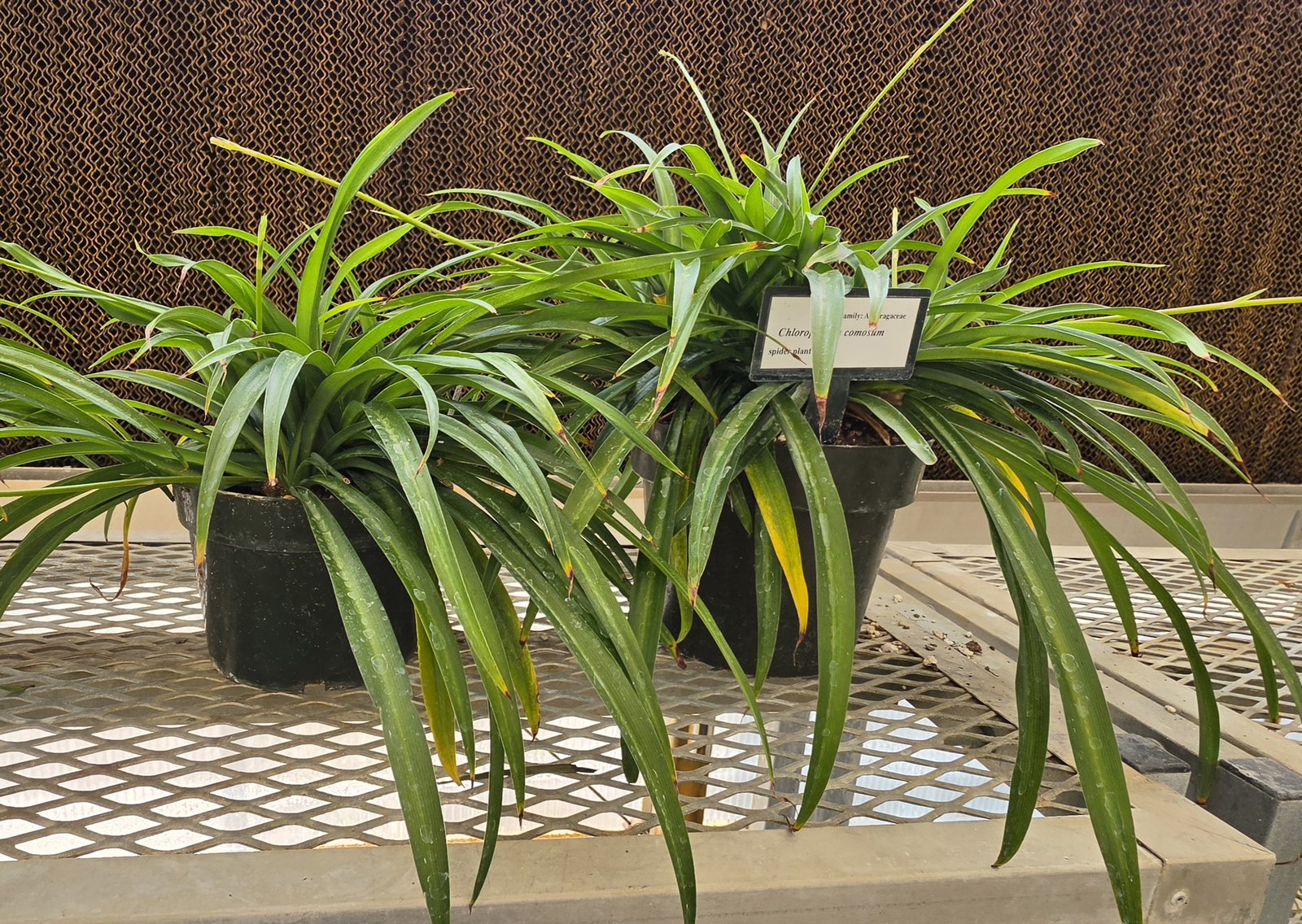
Chlorophytum comosum · Spider plant
CON-0006
📍 Location not set
Identification
Chlorophytum comosum · Spider plant
The plant label visible in the photo explicitly reads 'Chlorophytum comosum, Family: Asparagaceae, spider plant', confirming the identification directly. This is also consistent with the visual characteristics: long, narrow, arching grass-like leaves with a slight keel, forming a dense rosette from a central crown, growing in a clumping habit typical of spider plants. The leaves show characteristic yellowish-green coloration with some variegation tendencies and pointed tips. No flower stalks or plantlets (the stoloniferous 'spiderettes') are visible in this shot, but the combination of leaf morphology and the confirmed label leaves no ambiguity.
Generated 2026-08-14 23:12 by anthropic (claude-sonnet-5).
Health
Care Information
- Light
- Bright, indirect light is ideal; tolerates moderate/low light but variegation may fade in low light and leaves can scorch in direct sun.
- Water
- Water when the top inch or two of soil is dry, roughly weekly; reduce frequency in winter. Sensitive to fluoride and chlorine in tap water, which can cause brown leaf tips.
- Nutrients
- Feed with a balanced liquid fertilizer diluted to half-strength every 4-6 weeks during spring and summer; skip feeding in fall/winter.
- Repotting
- Repot every 1-2 years in spring, or when roots and plantlets crowd the pot; this plant multiplies quickly via offsets and rhizomes.
- Soil media
- Standard well-draining potting mix; adding perlite helps prevent soggy roots.
- Temp & humidity
- Prefers 60-80F and adapts well to average room humidity, though it appreciates slightly higher humidity; avoid cold drafts below 50F.
- Temperature range
- 🌡️ 65-80F
- Humidity range
- 💦 40%+
- Care group
- 🏷️ Medium Light & Moderate Humidity
- Toxicity
- Non-toxic to humans and pets; safe for public areas and around curious visitors or animals.
- Pests & diseases
- Generally trouble-free and quite hardy; occasional spider mites or mealybugs in dry conditions, and root rot if overwatered or left in poorly draining soil.
- Propagation
- Very easy - simply pot up the plantlets ('spiderettes') that form on runners, once they have small roots, either while still attached or after snipping off.
Generated 2026-08-26 20:59 by anthropic (claude-sonnet-5).