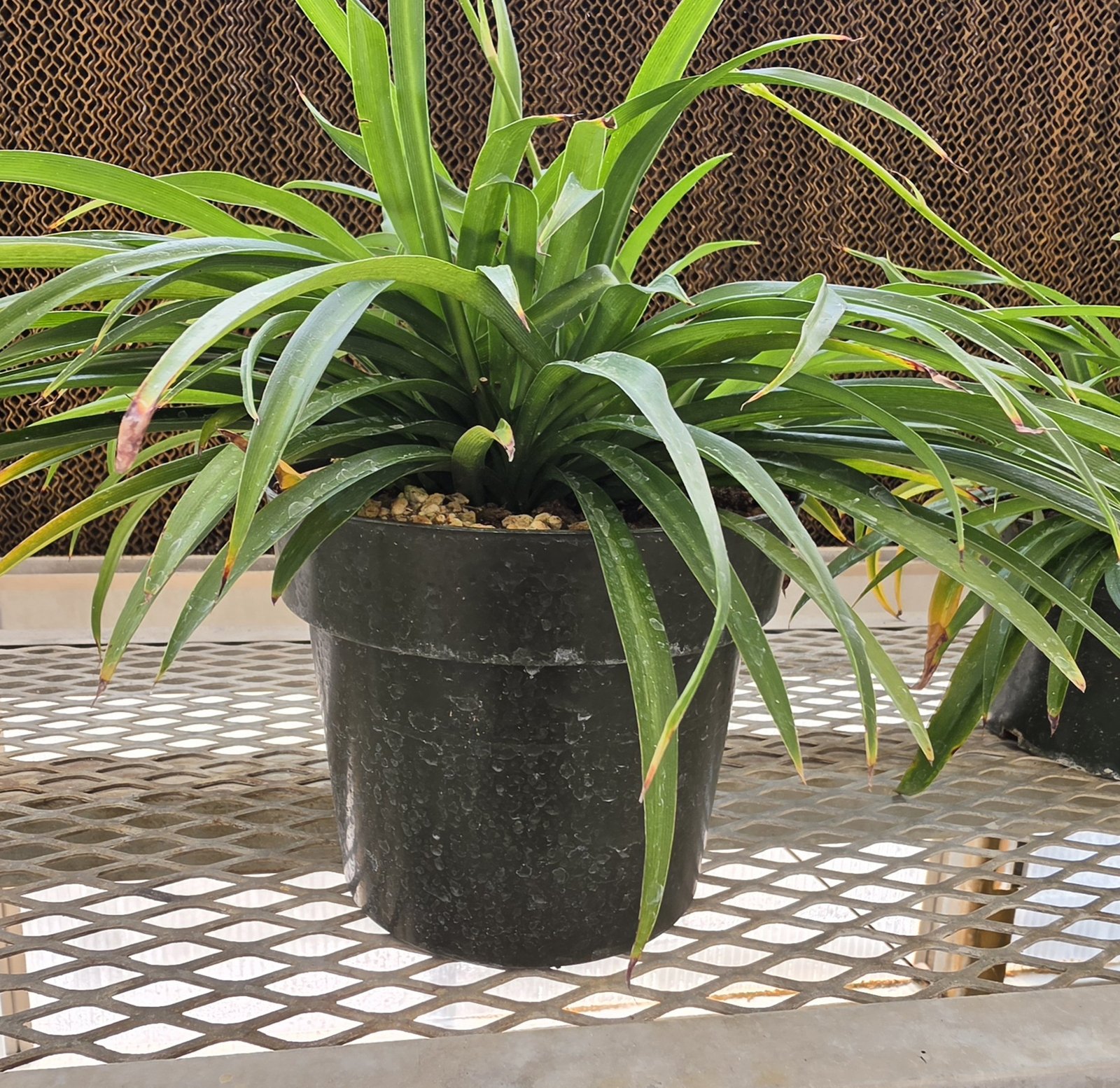
Chlorophytum comosum · Spider Plant (unvariegated form)
CON-0005
📍 Location not set
Identification
Chlorophytum comosum · Spider Plant (unvariegated form)
The plant forms a dense, radiating rosette of long, narrow, strap-like leaves with parallel venation, arching outward in all directions from a central point at soil level - a growth habit consistent with Chlorophytum. However, the leaves here are noticeably longer, wider, and more leathery/glossy than typical Chlorophytum comosum, and there is no sign of the characteristic white leaf-margin variegation or the stoloniferous runners with plantlets that usually make spider plants easy to confirm. Since Agapanthus, Hymenocallis, and Crinum (all bulbous plants with similar strappy foliage) have already been ruled out, I'm left comparing this to other strap-leaved monocots such as Liriope, Dianella (flax lily), or an unvariegated/robust Chlorophytum cultivar - all of which can look very similar in vegetative form. Without a flower, root/bulb structure, or evidence of stolons, I can't confidently distinguish between these. A photo showing the base of the plant (to check for a bulb vs. fibrous/tuberous roots or stolons), a close-up of leaf margins/venation, or - ideally - a flowering stalk would allow a much more confident identification.
Generated 2026-08-15 05:31 by anthropic (claude-sonnet-5).
Health
Care Information
- Light
- Bright indirect light; tolerates medium/lower light well but variegation is best with brighter (still indirect) exposure. Avoid direct hot sun which can scorch leaf tips.
- Water
- Water when the top inch or two of soil dries out, about once a week; reduce frequency in winter. Sensitive to fluoride/chlorine and salts, which show up as brown leaf tips -- use filtered or rain water if possible.
- Nutrients
- Feed with a balanced liquid fertilizer diluted to half-strength monthly during spring and summer; skip fertilizing in fall/winter since this plant is a light feeder and prone to tip burn from excess salts.
- Repotting
- Repot or divide every 1-2 years in spring, or when rootbound/pups crowd the pot; spider plants are vigorous growers and readily produce offsets that can be potted up separately.
- Soil media
- Well-draining standard potting mix; a bit of added perlite helps prevent soggy roots.
- Temp & humidity
- 65-80F; tolerates average indoor/conservatory humidity (40-50%) fine, though slightly higher humidity encourages lusher growth.
- Temperature range
- 🌡️ 65-80F
- Humidity range
- 💦 40-50%
- Care group
- 🏷️ Medium Light & Moderate Humidity
- Toxicity
- Non-toxic to cats, dogs, and humans -- safe near visitors and pets, and a popular safe choice for public-facing displays.
- Pests & diseases
- Generally trouble-free; occasional spider mites or mealybugs in dry indoor conditions. Brown leaf tips are common and usually from fluoridated water, excess fertilizer salts, or low humidity rather than disease.
- Propagation
- Very easy -- plantlets ('spiderettes') that form on runners can be rooted in water or soil while still attached or after cutting; division of the parent clump at repotting also works well.
Generated 2026-08-21 03:48 by anthropic (claude-sonnet-5).