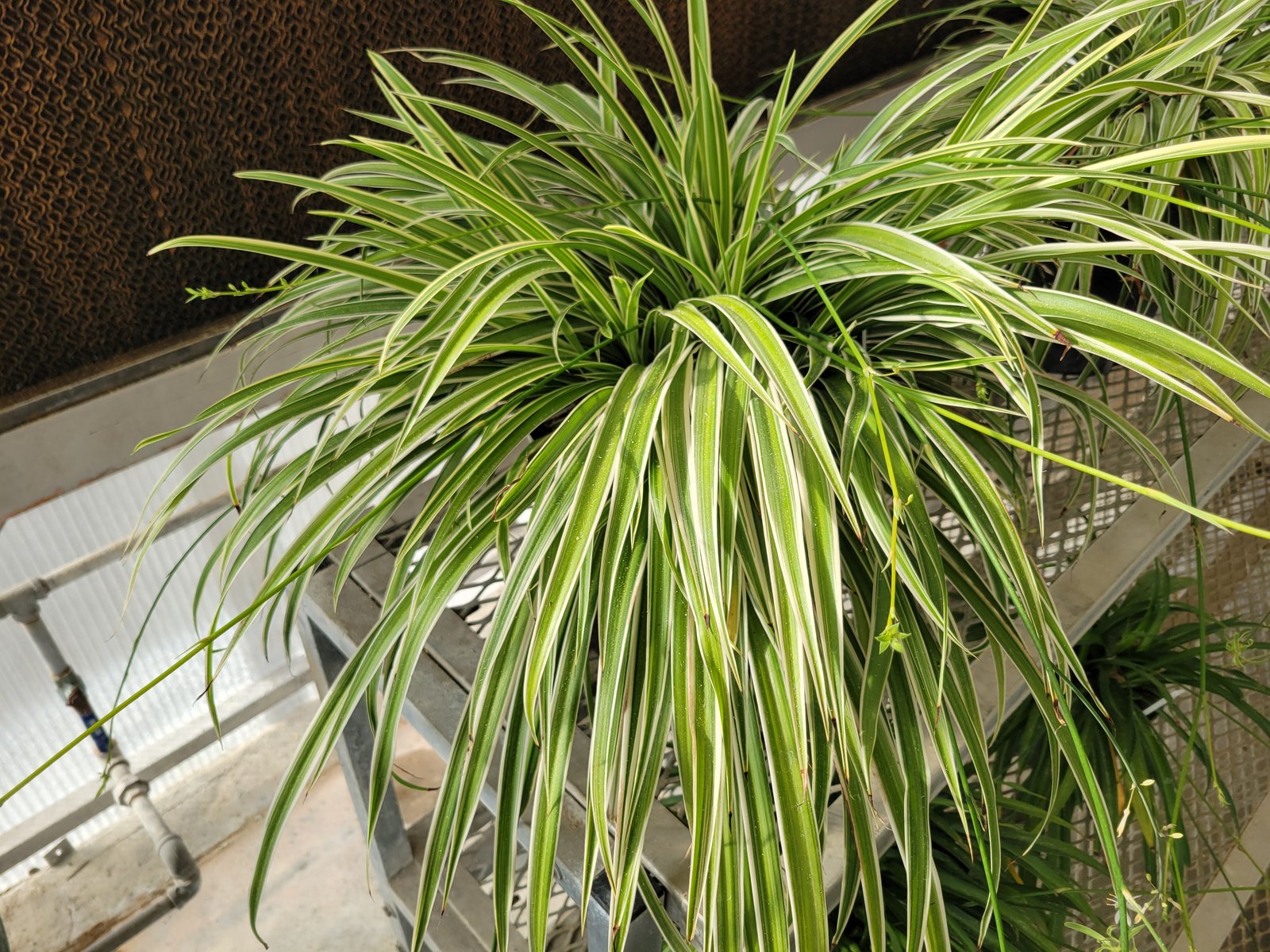
Chlorophytum comosum 'Variegatum' · Variegated spider plant
CON-0003
📍 Location not set
Identification
Chlorophytum comosum 'Variegatum' · Variegated spider plant
The plant has a clear identification label visible in the photo reading 'Family: Asparagaceae, Chlorophytum comosum 'Variegatum', variegated spider plant.' This matches the visual characteristics shown: long, arching, grass-like leaves with white/cream margins and green centers, growing in a dense rosette from a central crown, a classic growth habit for spider plants. The label provides definitive confirmation, and the morphology (linear recurving foliage, longitudinal variegation, clumping habit) is fully consistent with this well-known houseplant species.
Generated 2026-08-13 19:10 by anthropic (claude-sonnet-5).
Health
Care Information
- Light
- Bright, indirect light does best; tolerates lower light but variegation may fade, and direct hot sun can scorch the leaf tips.
- Water
- Keep soil evenly moist but not soggy, watering when the top inch of soil dries out; reduce frequency in winter to avoid root rot.
- Nutrients
- Feed with a balanced liquid fertilizer diluted to half-strength monthly during spring and summer; skip fertilizing in fall and winter.
- Repotting
- Repot every 1-2 years or when roots and plantlets crowd the pot; spring is the ideal time, and root division can be done then too.
- Soil media
- Standard well-draining potting mix with some added perlite for aeration.
- Temp & humidity
- Prefers 65-80F and average household humidity (40%+); very adaptable but avoid cold drafts below 50F.
- Temperature range
- 🌡️ 65-80F
- Humidity range
- 💦 40%+
- Care group
- 🏷️ Medium Light & Moderate Humidity
- Toxicity
- Non-toxic to humans; considered non-toxic or only mildly irritating to cats and dogs (though cats sometimes vomit after chewing leaves due to mild compounds), so safe near public foot traffic.
- Pests & diseases
- Generally trouble-free; watch for spider mites and mealybugs in dry air, and root rot if overwatered or left in poorly draining soil. Brown leaf tips are common from fluoridated tap water or over-fertilizing rather than pests.
- Propagation
- Not recorded
Generated 2026-08-15 05:30 by anthropic (claude-sonnet-5).