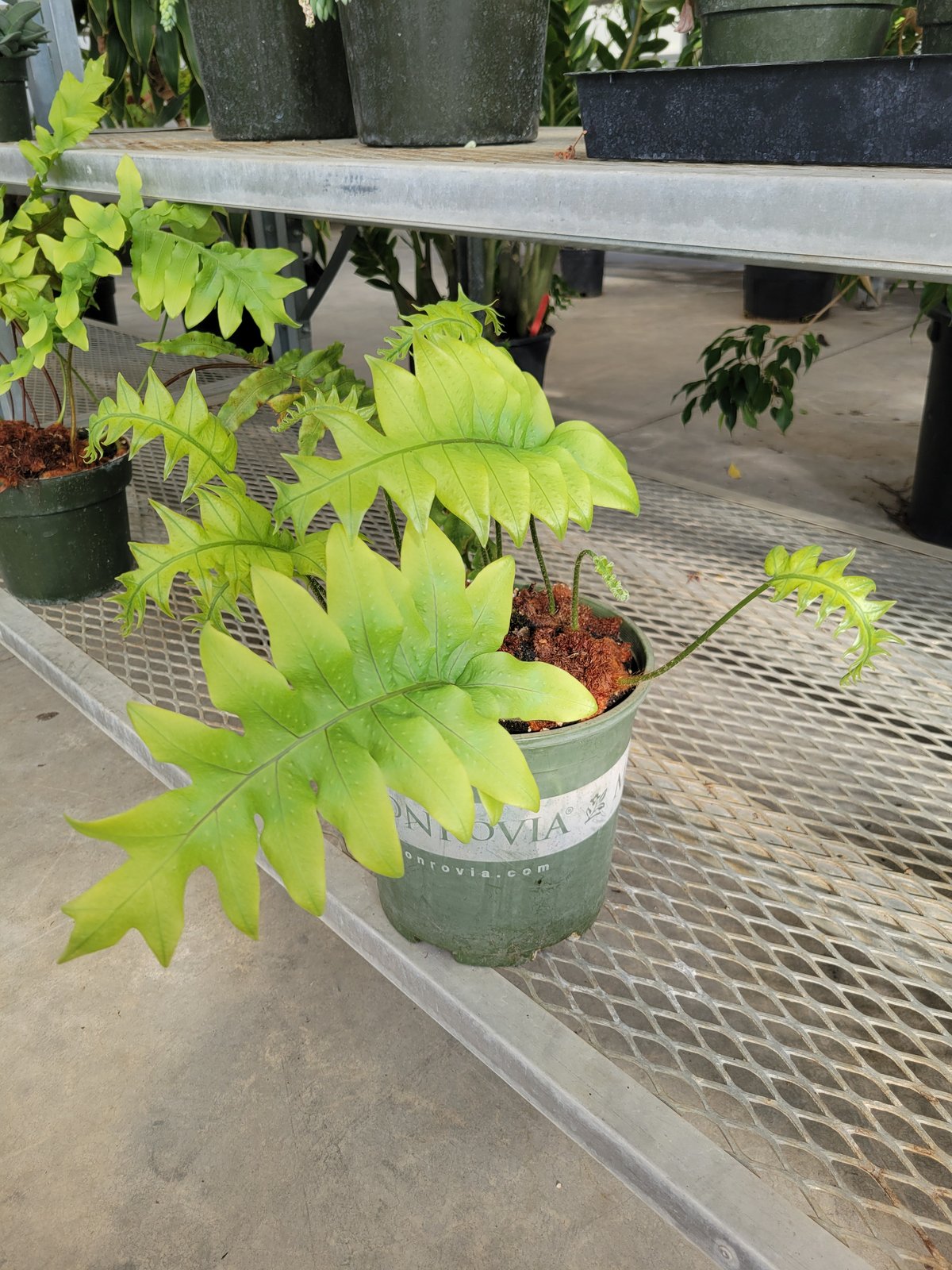
Microsorum diversifolium · Kangaroo paw fern
CON-0001
📍 Location not set
Identification
Microsorum diversifolium · Kangaroo paw fern
The fronds show the characteristic irregular, deeply lobed pinnae with wavy, undulating margins and rounded lobe tips, arising from a creeping rhizome visible trailing over the pot edge - classic growth habit for kangaroo paw fern. The sori are arranged in scattered round dots on the underside/visible through the leaf surface in rows, consistent with Microsorum. This differs from Phlebodium aureum (which has more regularly pinnatifid, blue-green glaucous fronds with smoother margins) and from Microsorum musifolium (which has broader, strap-like undivided or minimally lobed fronds, often with a crocodile-skin textured surface). The irregular lobing and narrower, more deeply cut segments with wavy margins here point more toward M. diversifolium rather than those two rejected IDs. However, I can't rule out other similarly lobed Microsorum cultivars/hybrids (e.g., Microsorum scolopendria or some Davallia species) with full certainty from this angle alone - a clearer shot of the sori pattern and rhizome scales would help confirm.
Generated 2026-10-06 17:51 by anthropic (claude-sonnet-5).
Health
Care Information
- Light
- Bright, filtered light to partial shade; can tolerate some direct morning sun but avoid harsh midday exposure.
- Water
- Keep soil or mounting medium evenly moist; water when the surface begins to dry, roughly every 5-7 days, reducing slightly in cooler months.
- Nutrients
- Light monthly feeding with a diluted balanced liquid fertilizer during spring and summer; skip in winter.
- Repotting
- Repot or divide every 1-2 years when the creeping rhizome outgrows its container; use a shallow, wide pot since roots stay near the surface.
- Soil media
- Well-draining, organically rich mix -- standard potting soil amended with perlite and bark works well; can also be mounted like an epiphytic fern.
- Temp & humidity
- 65-85F; thrives in high humidity (50-70%+) -- mist regularly or place on a pebble tray in drier rooms.
- Temperature range
- 🌡️ 65-85F
- Humidity range
- 💦 50-70%+
- Care group
- 🏷️ Bright & Humid
- Toxicity
- No known toxicity concerns; safe around pets and visitors.
- Pests & diseases
- Generally trouble-free; watch for scale and mealybugs, and guard against root/rhizome rot if kept too wet or in poorly draining media.
- Propagation
- Divide the creeping rhizome into sections with fronds and roots attached and pot separately; this is far more reliable than growing from spores.
Generated 2026-08-17 18:49 by anthropic (claude-sonnet-5).